Saturday, September 14, 2013

ACLU sues Etowah Co. Sheriff over compliance checks

All I can say is it is about damned time the ACLU has finally gotten off their asses to fight these laws. If only they had done this sooner.

http://blog.al.com/east-alabama/2013/09/aclu_files_suit_against_etowah.html

ACLU files suit against Etowah County Sheriff over registered sex offender house searches
By William Thornton | wthornton@al.com 
on September 12, 2013 at 3:04 PM

GADSDEN, Alabama -- The American Civil Liberties Union has filed a lawsuit against Etowah County Sheriff Todd Entrekin and two officers in the department over what they say are "unannounced, random, and suspicionless" searches of the home of a registered sex offender.

The lawsuit, filed in U.S. District Court for the Northern District of Alabama, does not name the three family members. They are identified in the suit as John, Jane and James Doe. The law firm of Jaffe & Drennan filed the suit today, according to a news release.

ACLU Attorney Brandon Buskey said the searches are "unconstitutional harassment."

"These officers are trampling on this family's constitutional rights, and because this is the sheriff's policy, we fear this may be happening over and over again to families around the county," Buskey said in a release.

According to the ACLU, one member of the family is a registered sex offender because of an offense committed as a child. The suit contends he has "fulfilled every requirement" under the offender registration and community notification act. He must register four times a year with the sheriff.

However, the ACLU contends the family is threatened with arrest if they fail to cooperate with random inspections of their home. The suit contends this is a violation of the family's Constitutional rights, because it takes place without a warrant or any reasonable suspicion of wrongdoing.

The suit seeks an end to the searches and the policy of inspecting registered offenders' homes. It also seeks unspecified monetary damages.

Sheriff's Department spokeswoman Natalie Barton said the department was aware of the lawsuit, but had not seen the complaint and had no comment.

Wednesday, September 4, 2013

FBI: Anniston man hired undercover agent to kill neighbor

Vigilante violence encouraged by the registry is very common these days. I bet this guy gets a slap on the wrist.

http://www.14news.com/story/23259716/fbi-anniston-man-hired-undercover-agent-to-kill-neighbor

FBI: Anniston man hired undercover agent to kill neighbor
Posted: Aug 26, 2013 5:38 PM EDT
Updated: Sep 02, 2013 6:27 PM EDT
By WBRC Staff - email
  
BIRMINGHAM, AL (WBRC) -
A disabled Army veteran from Anniston has been charged in a murder-for-hire plot against his neighbor, FBI officials said Monday.

Allen Wayne Densen Morgan, 29, is accused of hiring an undercover FBI agent to murder a man he believed raped his wife days earlier, according to court documents filed by the FBI.

The affidavit says an FBI agent called Morgan pretending to be a member of the Ku Klux Klan on Thursday, Aug. 22. The agent called to verify that Morgan wanted to hire someone to kill his neighbor.

[READ THE FULL COURT DOCUMENT HERE]

Morgan told the agent that he had just confronted his neighbor in Munford and fired several rounds at the ground to intimidate him. He said he didn't intend to kill the neighbor then because "several people were present."

According to court documents, Morgan described how he wanted his neighbor murdered by stating, "I want this man hung like a tree like an animal. I want his [expletive] cut off and I want him cut...I want him hung from a tree and gutted...that's how I want him to die. Die a slow painful death and that's it."

Morgan said he would discuss payment with the supposed hit man when they met up on Sunday, Aug. 25.

On Sunday, two undercover agents met Morgan at the Econo Lodge in Oxford around 3:30 p.m.

Morgan offered them payment in the form of a watch and a necklace and also promised to pay them with a firearm at his home. He gave the undercover agents a map to his neighbor's home and described his neighbor's physical appearance.

At the end of their meeting, the FBI agents took Morgan into custody, questioned him, and charged him murder for hire.

Morgan made a brief appearance along with U.S. Marshals at the Jefferson County Sheriff's Office on Monday, but he is no longer in custody there, according to a spokesperson for the sheriff's office.

It's unclear where Morgan is currently being held, but the FBI confirms he is in U.S. Marshals' custody.

Morgan had an initial appearance on Monday morning. There is no word yet on his bond.

FBI spokesman Paul Daymond says Morgan could possibly also be charged with hate crime.

FOX6 News has not been able to obtain a mug shot of Morgan because he is in federal custody and the Department of Justice doesn't release such photos.

We have also learned that Morgan's neighbor, the man he wanted to be killed, does have a prior record. In 2008, he was accused of raping a 13-year-old and he pleaded guilty to a lesser charge.

Morgan told undercover agents during one of those conversations that they could pull a picture of his neighbor from the sex offender registry website.

Wednesday, July 31, 2013

Anniston PD reminds us that teen sexting is a Class A Felony. How quaint!

Don't forget, teens, if you take a naughty pic of yourself and send it to someone, you're a kiddie porn producer, and we will give as much time as a murderer. Yee-haw!

http://blog.al.com/east-alabama/2013/07/anniston_police_speaking_out_o.html

Anniston Police speaking out on dangers of sexting following teen girl photo case
By William Thornton | wthornton@al.com 
on July 26, 2013 at 9:34 AM, updated July 26, 2013 at 4:14 PM


ANNISTON, Alabama -- Anniston Police officials are speaking out about the dangers of "sexting" as they investigate a case involving a girl sending a nude photo of herself in text messages to friends.
Sgt. Chris Sparks said police learned about the case after the mother of a "very young teenage girl" reported the incident on Tuesday.

Police believe a teenage girl sent a nude photo of herself to friends sometime in May or June. Those friends, in turn, sent the photo to others.

"It's still being downloaded," Sparks said. "There's no telling how many people have seen it now."

Police are still investigating the case. Sparks said parents and children need to be aware of the ramifications of sexting. Besides potential embarrassment, the photo may "follow" them as they look for a job, he said. Parents should be interested in what their children are doing with their phones, understanding that "privacy ends as soon as you hit send.

"Once you send that image, you're disseminating child pornography, and that's a class A felony, the same as some violent offenses," he said. "If a person was convicted, they would have to register as a sex offender."


Tuesday, July 23, 2013

State of Alabama v. Thornal Lee Adams, alias

State of Alabama v. Thornal Lee Adams, alias (CR-08-1728, Oct. 2010)

Summary:

"The State of Alabama appeals the trial court's order declaring unconstitutional that portion of former § 15-20-22(a)(1), Ala. Code 1975 -- a part of the Community Notification Act ("CNA"), § 15-20-20 et seq., Ala. Code 1975 -- requiring an adult criminal sex offender to provide the Alabama Department of Corrections ("DOC"), at least 45 days prior to the offender's release from custody, "the actual address at which he or she will reside or live upon release", and dismissing the indictment charging Thornal Lee Adams with violating that section. We affirm."

The Alabama Court of Appeals ruled the practice of charging homeless registrants for "Failure To Register" violated Equal Protection (14th Amendment) and Cruel and Unusual Punishment (8th Amendment).

Since the Alabama Supreme Court denied certiori in this case, this decision sits as the highest decision in the state. So simply the act of being homeless is not enough to warrant a "failure to register" charge.

Read more in the link:

http://statecasefiles.justia.com/documents/alabama/court-of-appeals-criminal/08-1728.pdf?ts=1370466526

Sunday, July 14, 2013

Huntsville looks to ban registrants from working as sales solicitors

This news is a little late in coming, but had I seen this days ago, I would have tried stopping it. I also see the city is attacking panhandlers as well.

http://itemonline.com/local/x1333761469/Door-to-door-solicitors-subject-of-city-rule-change

July 2, 2013
Door-to-door solicitors subject of city rule change
By Brandon K. Scott
Staff Reporter

HUNTSVILLE — The Huntsville Police Department does not have the authority through city ordinance to deny a permit to door-to-door solicitors with serious criminal histories like homicide, sex offenses or burglary.  The city requires solicitors to obtain a permit from HPD, but the police could only deny the request for untruthfulness on the application.

That is what led police chief Kevin Lunsford to introduce an amendment to Chapter 32 of the Code of Ordinances that regulates solicitation and peddling for public safety.

“So if they were just paroled out of TDC, if they were a sex offender or a burglar, we couldn’t deny them a permit to come to your house,” Lunsford said at the June 18 City Council meeting. “So that’s the main thing we started trying to address with this, and this gives us some avenues to deny them if they’ve had certain convictions in the last five years or so.

“It’s more clearly specified the times of day or night when they could and couldn’t. We don’t want them coming at all hours of the night.”

The rule change would prohibit solicitation between 8 p.m. or sunset (whichever comes first) and 9 a.m. Added language to the ordinance says the police chief could refuse or revoke a certificate if the applicant has been convicted of a felony or misdemeanor involving a sex offense, drug trafficking, burglary, theft, or any violent crimes within five years of the application.

Police can also deny an applicant’s request if they have been under civil judgment for fraud.

Lunsford said the department has seen an increase in panhandlers along interstate corridors, so a change in the ordinance makes it an offense to engage in panhandling in a public place within the corporate city limits.

The City Council will consider voting on the ordinance at tonight’s regular session.

Thursday, June 20, 2013

Decatur Police and state Attorney General are claiming foster homes are the same as daycares

If what is in this media account is true, then the floodgates open up to declare every family with children a "daycare," thus exploiting a loophole in the law to banish all former offenders from the state by declaring families "day care centers." This is abuse of power at its finest.

CONTACT INFO

Decatur Police

Chief of Police:
Ed Taylor
Department Phone No:
(256) 341-4600
Department Fax No:
(256) 341-4605


Alabama Attorney General Luther Strange
Mailing Address:
Office of the Attorney General
P.O. Box 300152
Montgomery, AL 36130-0152

Physical Address:
Office of the Attorney General
501 Washington Avenue
Montgomery, AL 36104

Office Main Number: 334-242-7300
Consumer Protection Section:  1-800-392-5658
Office of Victim Assistance: 1-800-626-7676

http://www.waaytv.com/news/local/foster-homes-are-now-protected-from-sex-offenders-living-near/article_34a09132-d931-11e2-80d2-0019bb30f31a.html?_dc=963225002866.2384

Foster homes are now protected from sex offenders living near-by
Posted on June 19, 2013
 by Rachel Keith

DECATUR, Ala. (WAAY)-The Decatur Police Department is wanting foster families to know that they are now protected in the Sex Offender Notification and Registration Act.

The Sex Offender Notification and Registration Act of 2011 prevents more than 11,000 sex offenders in the state from living within 2,000 feet of a school or child care facility. The Decatur Police Department says that now includes foster homes.

"We've received notification of a recent Attorney General opinion which stated the section of the sex offender notification and registration act covering child care facilities also includes foster homes" said Lt. John Crouch with the Decatur Police Department.

Decatur Police are encouraging foster families to list their addresses with their local law enforcement agency.

"Then they can be included in the restricted areas where sex offenders are not allowed to live" said Crouch.

Foster parents like Gabe and Melissa Ross were happy to hear that option is now available to them.
"We have six children in our home and we try to do as much as we can but I feel like this law will really help and add to the security of our home" says Melissa Ross.

"Anything we can do to help protect these children is a great thing because they grow up with such difficult backgrounds, a tough foundation" said Gabe Ross. "Anything we can do to help protect them, provide safety for them."

One foster family has already added their address to the list with the Decatur Police Department and the Ross family says they could be next.

"We would consider putting our name on the list to help protect our children" said Melissa Ross.

Monday, May 27, 2013

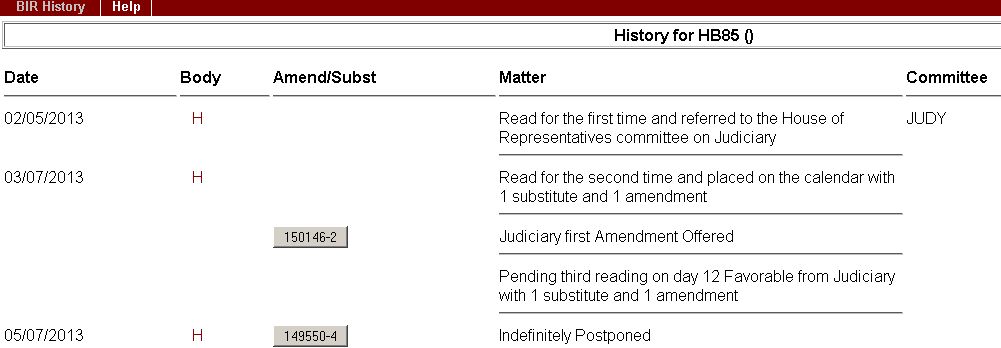
Alabama's legislation is officially over, and HB 85 dies from neglect. For now.


On May 20, 2013, the Alabama state legislature officially ended. And HB 85 is still "indefinitely postponed." Unless there is a "special session," HB 85 is dead in the water. For now. (This is the best we can expect, as no pol will go on record as opposing this law.)

Does this mean we'll never see this bill again. As I stated before, this bill has existed in the past (and failed just as it did this year). I will be keeping a twice-weekly watch over the legislative website in the meantime. For now, victory is ours!

Keep in mind one thing. An ounce of prevention is worth a pound of cure. But the prevention is not a one-time event. Each new legislative session means new people we have to educate. Our work is never truly finished.

Saturday, May 11, 2013

Birmingham attorney wants to change how juvenile sex offenders register

A great find from the Sex Offender Issues Blog.

It is nice to know even in the cesspool of bad legislation that is Alabama, there are a few people willing to address the laws. Kudos to this attorney, Richard S. Jaffe, for speaking out against Alabama's juvenile sex offender laws.

http://www.myfoxal.com/story/22212827/local-attorney-wants-to-change-how-juvenile-sex-offenders-register


Local attorney wants to change how juvenile sex offenders register

Posted: May 09, 2013 10:53 PM EDT
Updated: May 09, 2013 10:53 PM EDT
By Vanessa Araiza

BIRMINGHAM, AL (WBRC) -
If you look up sex offenders online you're hit with hundreds of names, addresses and photos.

The current sex offender registry includes juvenile sex offenders and trial lawyer Richard S. Jaffe wants to see that changed.

"I think it should be an individual basis. I also think that if a person demonstrates rehabilitation and successful treatment that they shouldn't have to register for the rest of their lives," said Jaffe.

He said studies have shown a person's brain doesn't mature until between 22 and 25 years of age. Jaffe believes juvenile sex offenders can be rehabilitated.

"I'm not saying that a 15-year-old shouldn't be held accountable for their actions but at the same time there's a limit to the type of punishment and the extent of punishment that anybody should have to undergo," said Jaffe.

Right now Jaffe is working a case involving an offender who is now 19-years-old.

He said when his client was 14 he was playing a game with some other teens and ended up being charged and convicted of a sex crime. Now he is registered as a sex offender.

His father talked to FOX6 News about his son's conviction. He wanted to remain anonymous but said before all this happened he was fine with the way the laws were laid out.

"I was one of those people until this happened to us. And I will say this, I will never see a news story or read an article and automatically believe someone is guilty," he said.

If the law doesn't change he said it could mean an ill future for his son who he believes was wrongly convicted.

"It's going to affect him in many ways. His career, his personal life. And even if he's fortunate enough to marry and have children I mean he would never be able to even coach his kids ball teams," said the teens' father.

Jaffe wanted to emphasize that all cases are different and each one should be handled that way.

FOX6 News reached out to Chief Deputy Randy Christian with Jefferson County Sheriff's Office for his input.

He said the department works very hard to make Alabama's law one of the toughest in the country and obviously they want it to stay that way.

Copyright 2013 WBRC. All rights reserved.

Here is the link to Richard S. Jaffe's lawfirm:

http://www.rjaffelaw.com/Attorneys/Richard-S-Jaffe.shtml

Saturday, April 20, 2013

A letter to the Alabama House of Representatives from a ReFORM-AL reader

In my last post, I notified my readers that HB 85, the anti-clustering bill preventing registrants from living within 500 feet of each other and one per multi-family unit, has passed Judiciary and is nnow up for a full vote in the House of Representatives (CLICK HERE for more information on contacting your legislators).

Below is a letter sent to the House by a reader of this blog. I felt it was very well-written and worth sharing. Personal information has been blocked for their protection:


Dear Members of the Alabama House of Representatives,
As a resident of Alabama and a concerned citizen of the Commonwealth, I am writing to strongly urge you to revise HB 85 not to be an Alabama state wide law for several reasons as follows:


  • HB 85 will force evictions on a multitude of sex offenders (SOs), with legal residences, to simultaneously, widely scatter them inside new, unaffected neighborhoods and create a multitude of new homeless areas in each county across Alabama.   The legal living areas outside of neighborhoods that are available in counties such as Mobile are exacerbated or not open to SOs so the only alternative for SOs is to move inside more neighborhoods (or become homeless) due to the current 2,000 feet SO law restrictions (Statutes 15-20-25 and 15-20-26).  Also, the current 31* surveillance sex offender laws (all Class C felony punishments) are already overwhelmingly enough laws to force all former offenders into compliance and prevent crimes.  If HB 85 is passed the fallout will be spreading out a greater potential for more inflamed fears and worst situations into currently unaffected neighborhoods than ever before across Alabama.  Keeping former offenders together makes it as though they were fish in a barrel while infusing a reverential fear on each group of offenders by law enforcement with the current 31 surveillance laws.  Instead of a HB 85 state wide eviction law, let each county decide for themselves because they can best evaluate each group of sex offenders’ living areas, whether it’s safer for SOs to stay living outside of neighborhood areas or if they need to thin out and scatter SOs inside neighbors or to other neighborhoods (or become homeless).  Also, assigning a godly mentor for any particularly troubled group of SOs residence can help.  Hundreds of SOs that are living in their own communities where they received their sentencing will be evicted by the HB 85 forced displacement law across the state of Alabama.
  • Multitudes of law abiding community voters will be deeply ungrateful and angry with the supporters of HB 85, requiring a state wide sex offender’s population move.  HB 85 is a fear-mongering attempt to creating a state wide crisis by fanning panic and hysteria from an isolated halfway house situation in Chilton County.  There are no sex offender’s halfway houses in Mobile County or grouped residence that have 37 sex offenders as does the group housing situation in Sen. Kurt Wallace’s County (Chilton), in which a couple of neighbors started commenting on the Triumph Church ministry (halfway house offenders walking around areas and utilities problem, but no illegal actives or arrests).  A safer solution than a state wide HB 85 forced population move is to just make the nearby neighborhoods off limits to Triumph’s residences (not to congregate, bother or come onto other’s property without being invited) and make quicker utilities repairs instead of oppressing every county in Alabama with the HB 85 law.  The sponsors of HB 85 say they want safety, but another motivation is that they want to force the shut down all legal sex offenders group housing (including religious groups) without appearing to be prejudice against religious organizations (i.e. Triumph Church in Chilton County and Shiloni Transition Ministry in Jefferson County– where the first controversy started) and not to stir up protesters among religious voters in Alabama (by-the-way only Christian evangelists try to save the lost SOs).  As is with most other law proposals, the current 31 Alabama sex offender surveillance laws were quietly passed.  Counties in Alabama usually do not experience some of the new SO Laws’ fallout until sometime later, such as with the 2,000 feet sex offender law (statutes 15-20-25 and 15-20-26, passed in 2005) which forced multitudes of SOs to move outside of numerous neighborhoods and squeeze into about 3% legal areas to reside in.  The proposed HB 85 will do just the opposite and re-scatters SOs inside numerous unaffected neighborhoods across Alabama.  Mobile Police and Sheriff Departments are highly effective in keeping Mobile County’s grouped sex offenders under very high surveillance to prevent such concerns that occurred in Chilton County.  Denying SOs shelter is not the right thing to do and to simultaneously, widely scattering sex offenders inside more neighborhoods is an extremely, worst fallout (more oppressive situations) if the proposed HB 85 is passed state wide.  We want and desire for all families to be safe but HB 85 is similar to screaming fire when there is no fire kindling except the "fear selling" for HB 85.  My mother always said that “whosoever  rewards you evil for doing good or right, evil will not depart from their house Prov.17:13.”  The mandatory eviction and displacement of thousands of former offenders for doing right only destabilizes them from becoming a useful, rehabilitated tax payers, who labor to maintain housing, provide restitution payments to victims, and child/family support they need to fulfill.
  • Depriving former offenders the liberty to keep their residences will simultaneously force a huge number of offenders into becoming homelessness, state wide.  Homeless former offenders will have to scatter in search of food, clothing, medicines, health care, money, etc. and will over burden every community’s volunteer groups that help the needy because of HB 85.  Also, spreading out offenders into homelessness will only make them much harder to keep up with by surveillance officers (it oppresses law enforcement from being able to focusing time needed on current crimes happening in their community). If you do not yield some relieve for the least of these (former offenders) then you will only continue to create more fear-mongering situations in more communities, state wide and it is more freighting to entertain a non-safer law as HB 85 will become, if passed.  The safest objective is to godly reform all form sex offenders, and to help them repent from passed wrong behavior.  Even permanently stereotyping them with a “sex offender” label for life incites more fear-mongering and unchangeableness.  It a cursed way to continuously slander offenders and expect a change from criminal mindedness, unless you do not want a change for the better.  It’s beneficial to all communities to help mentor and change offenders for the better instead of abandoning them to failure.  Societies are only as strong as their weakest links.
  • HB 85 will cause offenders to lose their jobs due to lack of housing and/or transportation (inability to stay cleaned up enough to maintain employment or forced to move outside of transportation areas needed for jobs, required registrations/probation, mental health, addiction counseling, health care, etc.).
  • Hurts numerous victims’ families when offenders are not able to continue restitution and their child/family support payments.
  • Creates a simultaneous surplus of recidivism rates to overcrowd jails… why not make a Federal Law to outlaw all forms of adult pornography (crime roots) national which will stop most new sexual crimes, marriage or family problems, etc. from ever happening?  Going overboard with 31 sex offender surveillance laws only proves that laws are not the total answer to crime prevention.  A changing of a person’s mind must come first from their hearts’ understanding of what harms and wrongs others.  Knowing we are sinners in need of God’s daily help, renouncing sins and following godly principles and man’s laws will change a man’s ways.
  • Non-grouped sex offenders are much harder for Law Enforcement to monitoring even with increased officers.  In spite of speculations, groups of sex offenders do the opposite of wanting to cause each other to conspire or violate again.  Unlike heroin addicts and alcoholics that still think their partying is a highly acceptable and normal activity.  They pride themselves and look-up to others that want to continue partying with them.  Whereas a sex offenders that’s been incarcerated learns how perverted/grotesque/sinful they are and rejected/hated/malice by inmates, relatives, authorities, etc. and do not want to stay that way ever again.  Former offenders live each day in fear of retaliation (from other criminally minded people), malice and condemned like no others.  Actually the SOs that have been out awhile help encourage the newly released ones to remain law abiding, get a job, and get connected with a church and other good people.  Groups of SOs know that if any offender violates it will cause grave trouble for all SOs.  Do Kidnappers usually live isolated in single dwellings (as HB 85 will enforce) or do they usually live in grouped dwellings? The current 31 SO laws makes sure sex offenders stay under control and beat down enough to maintain permanent condemnation.
  • HB 85 will repay evil for an offenders’ continually following the laws.  Its prosecutions when you do wrong and punished, but its persecution or discrimination when you are doing right and then punished (My mother always told me, “Whoso rewards evil for good, evil will not depart from his house.”- Prov.17:13).   Offenders like everyone, need some positives reinforcements to keep walking uprightly, and not new persecuting punishments heaped on to those that have served their full sentences and are turning their life around for the better. 

Solutions that will stop most new sex crimes from ever happening are the following:


  • Attack the roots-- pass a Federal Law to forbid all forms of adult pornography (sold or produced) nationally.  The problem is that too many people want adult pornography to remain legal because they do not see how it harms others (sex crimes, marriage and family problems, etc.).  At least start educating the public/schools about the problems with keep adult pornography legalized.
  • Mandate school curriculum’s to teach kids that even touching another person’s privates is actually having sex and is wrong outside of marriage (in some situations punishable by law for life).  Abstain from having sex until they are an adult with only another consenting adult or marriage partner.  Adult and child sexual touching or incest is the most perverted/grotesque/sinful crimes with the most condemning punishments.  And teach them the 31 sex offender laws and punishments to prevent our next generation from falling into this demonic sin (former Pres. Bill Clinton taught Americans that touching another person sexually is not having sex and was re-elected).
  • Mail out to every mail box in Alabama a copy of the 31* sex offender laws which only a small fraction of the population know.  Then send out a copy every four years to keep the crime rates declining.


Also, I ask for an exemptions granted to my legal living residence.  I live at an ideal group SO location and I only have to walk directly across the street from my residences to my employment *** (about 350 feet from my room) for the past three years as noted below:

  • ****** at *****************, AL *****.
  • My  residence *** at ***************, AL *****. 


If HB 85 passes, I will be force to relocate.  The ****** has been an ideal legal grouped sex offender’s location in Mobile for many years for the following reasons:

  • It’s surrounded by commercial business properties on all four sides,
  • Outside of and away from all neighborhood areas,
  • Within 1,200 ft. are three Alabama Departments of Public Safety Offices (State ***, AL Bureau *** , and ********e), 
  • Has a four lane highway  connected directly in front of it (makes it easily and constancy monitored by law enforcement multiple times, daily),
  • Public Transportation Buses stops in front of ****** so no offenders have to walk through neighborhoods looking for transportation, etc.
  • Has no sidewalk so the public does not walk near this location.
  • No school bus stops anywhere on this route,
  • The manager monitors all residences closely and keeps all the utilities working properly.


I am one of three law obeying sex offenders (A.K., L.M., and myself-M.P.) that committed our crime in Mobile (not drifters), completed our full sentences, and we have become Christians seeking to be a blessing and not a curse.  We have lived more than three years at the ****** location (no complains, etc.).  Our families live here in Mobile County, we need their fellowship reinforcement, and we work at our jobs to help support them, too.  There are a few other offenders that temporarily stay here.  If HB 85 passes I will be one of the state wide thousands of offenders that will be force to relocate from living outside of a neighborhood area and then forced to live inside a neighborhood area or become homeless/jobless (unable to locate a legally available residence).
The ****** is another legal group sex offender’s location in Mobile to live at for many years.  It’s an ideal location with most of the same benefits as the C**** with one difference as follows:
The Mobile Police Headquarters and is only 1,500 ft. away from the group residence of offenders at ********, located at **** Mobile, AL
 HB 85 would be devastating to thousands of former offenders and to their families, too.
I urge you and the legislature to not pass HB 85 state wide, but instead to help the Triumph Church situation in place of scattering thousands of offenders into other unaffected neighborhoods and creating a worst situation for our voters, state wide.  I would appreciate a written reply that states where you currently stand on this issue.
Thank you for your time and consideration and look forward to hearing from you.

Sincerely,
M.P.

*Alabama Sex Offender Registration And Community Notification Statutes: 13A-11-200, 13A-11-201, 13A-11-202, 15-20-20, 15-20-20.1, 15-20-21, 15-20-22, 15-20-23, 15-20-23.1, 15-20-24, 15-20-25, 15-20-25.1, 15-20-25.2, 15-20-25.3, 15-20-26, 15-20-26.1, 15-20-26.2, 15-20-27, 15-20-28, 15-20-29, 15-20-30, 15-20-31, 15-20-32, 15-20-33, 15-20-34, 15-20-35, 15-20-36, 15-20-37, 15-20-38,  PDF Version of Final Guidelines, etc.


Monday, April 15, 2013

UPDATE: HB 85 passes the Judiciary Committee. Emails for the full house

Note: I am on the ARC Talk Radio on 4/17/13 to discuss HB 85, the anti-clustering bill. CLICK HERE to access the show. The show is archived for your listening pleasure.

I was just informed by phone today that HB 85, the anti-clustering law, has passed the Judiciary and will soon go before the entire House. Why it isn't noted on the legislative website, I'll never know, but now we need to address the entire state legislature.

In the coming days I hope to have more information on this latest development.

In the meantime, if you want to email all House Members, here is the list of those with an email address:

mike.hubbard@alhouse.gov, hvgaston04@yahoo.com, paul@pljpc.com, paulbeckmanjr@yahoo.com, mikeball@knology.net, allenfarley@bellsouth.net, cengland1@hotmail.com, 3007j@att.net, greeson@yahoo.com, waynejohnson259@yahoo.com, mljatty@andycable.com, poole@gpr-law.com, john.robinson@alhouse.gov, bsketa@aol.com, staterep@co.escambia.al.us, jbarton104@gmail.com, rgbups@yahoo.com, elainebeech83@gmail.com, daniel_boman@thebomanfirm.com, babs_131@att.net, klbrown@cableone.net, mack.butler@alhouse.gov, jwcarns@yahoo.com, dchesteen@panhandle.rr.com, terri@terricollins.org, asthp20@yahoo.com, rmdavis14@aol.com, ddrake1080@aol.com, allenfarley@bellsouth.net, jfaust@co.baldwin.al.us, chadfincher@alhouse.gov, berry.forte@alhouse.gov, hvgaston04@yahoo.com, wlmdex@hotmail.com, mickyhammon@gmail.com, salanharper@gmail.com, mhillcolum@aol.com, joe@hubbardcoleman.com, mike.hubbard@alhouse.gov, isonfor101@comcast.net, kenjohnsonrep@gmail.com, rrjlsr@gmail.com, pwlee@graceba.net, richard.lindsey@alhouse.gov, weslong@mclo.org, jlove32376@aol.com, barry.mask@alhouse.gov, lawrencemcadory@bham.rr.com, jimmcc@windstream.net, mcclur@bellsouth.net, c.mac.mccutcheon@gmail.com, bcld07@gmail.com, darriomelton@gmail.com, john@tuscaloosagop.org, mike.millican@alhouse.gov, house3@alhouse.org, barry@barrymooreindustries.com, mamoor48@bellsouth.net, clearimagesal@earthlink.net, jimpattersonhd21@gmail.com, kerryrich@mclo.org, broberts1229@cs.com, yke@cec.conteduc.uab.edu,scotthrod@yahoo.com,  d.r.sessions@att.net, randall.shedd@alhouse.gov, harryshiver@aol.com, david.standridge@alhouse.gov, reptodd@gmail.com, bsketa@aol.com, tughd81@gmail.com, tiger9127@bellsouth.net, jack@jackwilliams.org, philhouse44@gmail.com, repgregwren@yahoo.com

Today I wrote an email to them:

Members of the Alabama House of Representatives,

I was dismayed to hear that HB 85, the sex offender anti-clustering law, has passed the Judiciary Committee, despite my warnings of the dangers of such a bill, and now goes before a full house vote. I am writing you today to implore you to reject this terrible piece of legislation.

The purpose of the bill is to increase the already stringent residency restriction law, which is already 2000 feet from schools, daycare centers, and colleges, while local ordinances may further restrict where registered citizens can live. The law does not consider the fact few people will rent to registered persons, partially out of fear but mostly out of hatred for those on the public registry.

Consider the following statement:

“The Ordinance appears to attempt to ensure public safety, in certain parts of Allegheny County, by isolating all Megan’s Law registrants in localized penal colonies of sorts, without any consideration of the General Assembly’s policies of rehabilitation and reintegration.” -- Pennsylvania Supreme Court Justice CJ Castille, Fross et al. v. County of Allegheny, No. 17 WAP 2010

Residency restrictions create clusters of sex offenders. It is the one and only cause of clustering. If you make 98% of available housing off-limits to a group of people, a reasonable person would conclude the vast majority of those impacted by this law will move into the 2% of the remaining available housing. Passing HB 85 will eliminate much of that 2% of remaining housing. That is a very dangerous proposition.

You only need to look at the state of Iowa to understand the implications of passing a new, tighter restriction.

In 2005, Iowa passed what was at the time the most restrictive residency law in the country. Those forced to register as sex offenders could not reside within 2000 feet of any place children congregate. The impact of the law was immediate. Rural motels and trailer parks were filled with registrants as they flock to the few places left in the state where they could legally reside. One hotel with 24 rooms had 26 registered citizens at the address. Other registrants were left homeless and sleeping out of the back of their cars and trucks. Authorities reported three times as many registrants missing in the year after the residency law began than the year before (from 140 to 400). The city of Dubuque reported 90% of the city was off-limits. Another sheriff claimed that he used to know where 90% of the registrants in his county resided, but after the residency law took effect, he barely knows where half reside. By 2007, about 700 of the states 6000 registrants moved out of state or fled the country, while there was an increase of arrests of registrants for giving false addresses.

The 2007 Iowa monitoring report found that the number of sex crime convictions actually increased in the two years following the enactment of the 2000 foot residency restriction. In the year prior to the enactment of the law ending August 2005, there were 913 sex crime charges filed, with 433 ending and conviction. In the year following enactment of the law, between September 2005 and August 2006, there were 928 sex abuse charges filed, and 445 were convicted. Between September 2006 and August 2007, there were 1095 charges filed, and 490 convictions. The residency restriction laws had no positive impact on reducing sex crimes in the state. The number of failure to register convictions increased from 258 the year before the residency restriction was enacted to 442 the year after, in addition to 137 convictions for violating residency restriction laws. (See http://www.oncefallen.com/residencylaws.html for the references)

A number of studies have failed to find any correlation between where a person sleeps and whether a person re-offends. A 2003 study by the Colorado Dept. of Public Safety (which was inspired over fears of clustering, the premise of AL-HB85) found no correlation between residence and recidivism. In fact, those with stable housing and a POSITIVE support environment are less likely to re-offend. While much of the testimony before the Judiciary Committee involved transitional housing/ "halfway houses" (called "Shared Living Arrangements" in the study) the study also included those registrants living in a stable home environment. By contrast, those living where there was NO support or NEGATIVE support correlated with higher recidivism. This study dispels the claim Sen. Kurt Wallace has made that clusters of registered persons living in close proximity to each other are more likely to re-offend. (Link to Colorado study: http://dcj.state.co.us/odvsom/sex_offender/SO_Pdfs/FullSLAFinal.pdf)

Senator Kurt Wallace has made his intentions clear. He is passing a statewide law so he may shut down transitional housing in his county. Both Senators Ball and Wallace have been quoted in media reports they intend to close transitional housing in their home counties. I am dismayed the law is being used for what sounds on the surface to be little more than NIMBY-ism ("Not In My Back Yard"). But Senator Wallace's invited "expert" on the issue, Chilton County DA CJ Robinson, admitted before the Judiciary Committee that in three years, there have been no recidivists among the group of 33 Senator Wallace wishes to disband.

A number of victim rights groups and law enforcement officials have long criticized residency restrictions as counterproductive. The Iowa County Attorneys Association (of Prosecuting Attorneys) have spoken out against residency laws. (reference: http://legis.wisconsin.gov/lc/committees/study/2006/PLACE/files/murray4_place.pdf)

The Jacob Wetterling Resource Center (formerly the Jacob Wetterling Foundation) opposes residency restrictions because they cause more harm than good. "The problem is these laws may do more harm than good, if they work at all. In spite of good intentions, these laws have unintended consequences that can actually make it harder to track sex offenders." (see http://www.jwrc.org/KeepKidsSafe/SexualOffenders101/ResidencyRestrictions/tabid/84/Default.aspx)

“When you propose a law restricting sex offenders to 1,000 feet from any bus stop, that’s just not going to work,” said Laura A. Ahearn, executive director of Parents for Megan’s Law and the Crime Victims Center, who lives on Long Island. “You have to be reasonable.”
(reference: http://www.nytimes.com/2013/02/05/nyregion/suffolk-county-still-struggling-to-house-sex-offenders.html)

Residency restrictions in general already have caused a number of unconsidered consequences, including homelessness, vigilantism, and absconding. (see: http://www.ccoso.org/library%20articles/Eliminate%20Residency%20Restricitons%20for%20Sex%20Offenders.pdf)

HB 85 will increase failure to register charges, an increase in recidivism, and adverse consequences for registrants and their families as they are pushed even further to the fringes of society. (It must be noted, however, that those who "Fail To Register" are no more likely to re-offend. See http://www.ccoso.org/library%20articles/FTR%20SC%20short%20report.pdf)

A commonsense approach would be to abolish residency restrictions rather than increase them further by passing HB 85. Iowa repealed residence restrictions for all except those considered the highest risk offenders. Alabama could do the same. Instead, the state should consider commitment to an evidence-based program that stresses a positive rehabilitative environment. Recidivism rates for "sex offenders" is already low (between 2%-10% in virtually all US studies). Faith-based initiatives and positive programs like Circles Of Support and Accountability (COSA) have been shown to reduce that low rate even further. A 2005 study on COSA found the program reduced recidivism by 70%. (See: http://www.oncefallen.com/SOMyths.html for references)

There are effective treatment programs out there but they must stress healing for both offender and victim and allow registrants the opportunity to become productive citizens. HB 85 is not the way to do this.

Wednesday, March 20, 2013

Birmingham police waste "months of investigation" to determine some guy was using a computer at a coffee shop

An awful lt of resources went into this coffee shop
"investigation". Apparently donuts were somehow
involved as well.
It never ceases to amaze me how far Jefferson County goes to look ridiculously tough on "sex offenders". so let me get this straight, the county spent "months" investigating whether or not somebody on the registry was using a computer at a coffee shop? how dumb must the cops in Jefferson County be if they are wasting that much time and resources on nothing.

My official stance on this issue is this – the First Amendment guarantees that a person has freedom of anonymous speech, and that right is absolute except in cases where there is imminent harm, such as shouting fire in a crowded building. This rights extends to Internet speech, such as going to a coffee shop in using a social networking site to speak anonymously. This is an illegal arrest, and the police should be held liable for malicious prosecution.

Normally I would block the individual's name here to prevent further shame, but unfortunately, his name is part of the accusation used against him. His first name is Chris, but online he was going by the name Israel, though the last name was the same. He obviously was not hiding too well, and chances are he was using the networking tools to do the same thing the rest of us do, to keep in touch with loved ones and possibly to find a job, which we all know is damn near impossible to do in the state of Alabama once you're on the registry.


Convicted sex offender caught using fake name and free coffee shop wi-fi, Jefferson County authorities say
  By Carol Robinson | crobinson@al.com 
on March 20, 2013 at 11:45 AM, updated March 20, 2013 at 11:59 AM Print

Tye Christopher Moore
BIRMINGHAM, Alabama - Jefferson County sheriff's investigators have arrested a 42-year-old convicted sex offender who they say was going to a neighborhood coffee shop to use their free wireless service to access internet and social media sites.

Deputies on Tuesday arrested Tye Christopher Moore of Birmingham. Moore was convicted in 2008 in Washington for molesting a 12-year-old girl.

Jefferson Co Sheriff Deputy
Randy Christian
Chief Deputy Randy Christian provided this account of what led to Moore's arrest this week: In January sheriff's Computer Forensics and Sex Offender Units received an anonymous tip that a sex offender was visiting a local coffee house and using their free wi-fi to access the internet and social media sites. Authorities didn't disclose the name of the coffee shop.

Months of investigation showed the man was using the name Israel Moore, and that his true name is Tye Christopher Moore. He was using the alias to avoid being identified as a sex offender. Moore had registered with the Sex Offender Unit under his true name, but had failed to provide information about his assumed name and his social media activities at the time he registered.

Deputies obtained search warrants for Moore's vehicle and his home in the 7200 block of Rome Avenue. Deputies carried out these search warrants on Tuesday. His vehicle was located at a coffee shop. Investigators found evidence of his activities and attempts to conceal his true identity. Computer forensic investigators are continuing to study the electronic evidence seized for other criminal activity.

Moore is charged with failing to provide required information when registering and failing to notify of name change. Both are felonies under the Sex Offender Registration and Notification Act. He is currently in the Jefferson County Jail with bond set at $30,000.

"Like most of these types, he wanted to fly undetected below the radar. I'm so proud of our guys for seeing this through,'' Christian said. "It takes a lot of want-to and patience to bring a case like this to fruition. If it saves just one child from becoming a victim then we have been incredibly successful."

Thursday, March 7, 2013

ReFORM-AL at the AL HB 85 Judiciary Hearing

UPDATE: The substitution HB 85 is now online. Follow the bill here, and be prepared to address the bill to the full House, because it seems this bill may pass.

http://alisondb.legislature.state.al.us/acas/ACTIONHistoryFrameMac.asp?OID=79522&LABEL=HB85
Now on to the review of the Judiciary Committee Hearing:

First, the videos. You can click here to view the entire hearing playlist via YouTube (curtesy of the Sex Offender Issues blog:

http://www.youtube.com/playlist?list=PLSTd7IgvNsW3G5cJjDyl9VMqZ1V44D1Rb

Since YouTube limits videos to 15 minutes, I broke the video into three sections:


Here is my written summary of the Judiciary Committee Hearing:


ReFORM-AL at the House Judiciary Committee
For the past few weeks, ReFORM-AL has been trying to raise awareness of, and stop, Alabama's House Bill 85, the sex offender anti-clustering law. This is the second time this law has been raised in the state legislature, but unlike the previous legislation, two state representatives have expressed a personal reason for passing this legislation. More specifically, state representatives (Ball and Wallace) have stated in media reports their intent to pass the statewide law was to prevent halfway houses from forming in their backyards.

Within a couple of days since the public hearing was requested, a public hearing was indeed scheduled for Wednesday, February 27, 2013, at 1:30 PM. Considering how slow Alabama tends to be, I must admit I was caught off guard by how quickly a public hearing was set. I had barely 48 hours to plan, research, and commutes in order to create a presentation before the House Judiciary Committee. Shiloni Transformation Ministries of Birmingham invited me to be a part of their entourage planning to head to Montgomery to fight HB 85. I graciously accepted the offer, and they paid for a bus ticket to Birmingham so we could plan a strategy.

After arriving in Birmingham five hours behind schedule (no thanks to Greyhound) and getting a mere four hours sleep, I met with Bill Grier, the head of the ministry. Counting myself and Grier, six of us endured the two-hour drive from Birmingham to Montgomery. We honestly did not know what to expect.

We arrived at the Statehouse with plenty of time. There were a number of bills on the docket, but the press was far more interested in a controversial educational bill that was garnering a lot of public attention. The room for the House Judiciary Committee was no larger than average classroom, with the desks for the committee members took up more than half of the room. I set up my video camera and waited for the event to begin. Thankfully, the HB 85 discussion was the first on the docket, so we did not have to wait all afternoon. The room was filled with a number of people, including members of a battered women's shelter called Safeway; however, they did not speak out in favor or against this bill.

The hearing began with testimony from State Representative Wallace, who was one of the sponsors of the bill, but was not on the Judiciary Committee. Accompanying him in support of this bill was CJ Robinson, a county prosecutor from Wallace's house district. Wallace explained his intent with the law was to shut down housing options in his county, particularly those offered by a man named Ricky Martin, who runs a place called Triumph Ministries. Robinson read every catchphrase from the victim industry playbook, from claiming higher recidivism rates to stating if this law saves “just one child” then it is worth it.

I was the first of six individuals speaking out against HB 85. Unlike the proponents of the bill, I was given a mere 2 min. to speak, and to be honest, I don't believe I was even given two full minutes. Since there was no microphone, we were asked to speak loudly. This is never a problem for me. Of course, being forced to speak using my natural voice to amplify my words, and my speech consists of a condemnation of residency restriction laws and a rebuke of the phony statistics offered by the previous speaker, it is no small wonder why the legislature sought to cut me off. Apparently they were not prepared to hear the facts. After the speaker cut me off, and I began returning to my seat, State Representative Givan rebuked the speaker for not allowing me the opportunity to give my presentation and a fair amount of time, given the fact that Wallace and Robinson went well over 2 min. to offer their presentations.

However, despite never working before on any projects in the past, and after only having a couple of conversations with associates of Shiloni Transformation Ministries, we worked very well together. Each individual after me offered aid effort perspective as to why passing HB 85 would be a terrible mistake. Since this ministry was impacted by a countywide anti-clustering law in 2010, which impacted their ability to help register citizens, those who work for the ministry could offer proof of the practical effects of the law, which has resulted in their near collapse. Passing HB 85 would allow the injustices created by the Birmingham/Jefferson County ordinance to become a statewide injustice. One of the graduates of the program offered testimony, along with an attorney with the Southern Center of Human Rights, along with another well-spoken associate of the ministry. Each subsequent testimony supplemented the key points of the previous speakers, and addressed new concerns as they arose.

Perhaps the most surprising aspect of this particular committee hearing, besides having a decent amount of supporters at the hearing, was the fact that a couple of the judiciary committee members were openly questioning this bill. One of the committee members made note that the law does not differentiate between the most serious offenders and relatively minor offenses like public urination. Committee members questioned Wallace's personal motive for pushing this legislation. Robinson took even more heat; Robinson had claimed a 90% recidivism rate for sex offenders, yet when asked how many of the 33 registered citizens in the one cluster in his county have committed a new sex crime, Robinson had to admit that number was zero.

After the committee hearing, as I stood out in the hallway, State Rep. Givan apologized to me for the behavior of the committee head, gave me a hug, and thanked me for speaking out. She stated that it is very difficult to reform the deep-seated mentality of the state, though she is trying. I handed her the research papers I brought as evidence for the committee to consider.

After I left the Statehouse, our group paid a visit to the equal justice initiative, another nonprofit legal group that specializes in criminal justice reforms. We talked for over an hour, with the hopes the EJI may be able to help us with possible litigation should this bill pass. They shared a number of very sad stories with us, including one individual who is on the registry, who was arrested and sent back to prison for picking up aluminum cans along the side of a road, which apparently is considered employment, and arrested him for a work restriction violation.

It remains to be seen if the appearance of ReFORM-AL, Shiloni Transformation Ministries, and the Southern Center of Human Rights made any impact on the Judiciary Committee, but in light of seeing such vocal questioning of the bill by members of the judiciary committee, I remain optimistic this bill will not pass. As State Rep. Wallace passed by me after the hearing ended, I told him his law is going down. I keep the faith that it will.

If you are in the mood to educate that misinformed assistant DA from Chilton Co., here is the staff directory. It seems they don't have email or even a fax! : http://alada19.com/staff.htm


Thursday, February 21, 2013

Press Release: Shiloni Transformation Ministries opposes HB 85 anti-clustering law


Shiloni Transformation Ministry      Press Release

     Shiloni Transformation Ministry has taken a stand against Alabama HB 85. We believe this bill to be in direct violation of Holy Scripture and of citizen's unalienable rights. For those who are not familiar with the bill in question, we are referring to the Anti-Clustering Law being made statewide in Alabama. This law was passed in 2010 for the City of Birmingham in Jefferson County as a "test run" for the entire state to adopt this very damaging piece of legislation. When it was passed in 2010 it effectively disabled our ministry from being able to take in former sex offenders out of prison on a transitional basis. Our ministry has been working to rehabilitate those said sex offenders through use of the Bible, church-related classes, group therapy sessions, and accountability training. We focus on tried and true methods proven time and time again to lower the recidivism rate of sex offenders within all areas of the criminal justice system. HB 85 does state that there is a provision made for half-way houses that are "state approved," we have researched this statement and have found that currently there is no state approval agency or standard set in place. What this tells us is that the legislature of Alabama has taken a stand against our ministry, the US Constitution in the Freedom of Religion and has violated the due process of law, both on a federal and state level.

The Director, Bill Grier, of Shiloni Transformation Ministry had this to say, " The State of Alabama has selectively opposed the assistance of any and all convicted sex offenders. It breaks my heart that I have been made the messenger to sex offenders and even their families that my hands are tied and there is nothing I can do to help them because of the current residency restrictions. It used to be, before the homeless sex offender laws took place, that a sex offender could not even be released without a legal address. It is my belief that we are worse off with the homeless laws in place because the sex offender can be registered in the woods, under a bridge, or even a vacant house. This does not help to prevent them from reoffending but only supports recidivism because they have no structured environment to teach them to take responsibility, and hold themselves accountable for their past and enable them to move forward to become productive members of society. In fact, they don't even send out notification flyers for those registered as homeless. There are sex offenders who already have been granted parole but have nowhere to go. I and my wife Barbara saw this need while working as volunteers in many of the prisons in the State of Alabama and made it our mission to fill this need not only for the sex offenders but also to help protect the community. The current lack of proper treatment of sex offenders is largely to blame for the recidivism of sex offenders and has resulted in an over-crowding of the state and county jails. This is why Jefferson County and the City of Birmingham has went bankrupt since the issuance of the anti-clustering laws within Jefferson County. We will see the same thing happen statewide if  HB 85 is passed into law. We need to have some guidelines for operation and supervision  set in place for proper transitional housing. We need to stop viewing this problem as a political gambit and start working to correct the underlying problems that have been created by these laws. Only then will we see a positive change in our society."

We would also like to bring forward the statistics found from the State of Colorado Department of Corrections Study in 2003. They found that residency restrictions had no effect on recidivism of sex offenders, but a positive living environment, such as a halfway house or with a supportive family, increases an offender's likelihood of living a productive, successful life once their sentences have been served.

Please contact:

Dr. Dustin T. Friend    205-467-8293

ReFORM-AL in the news: "Sex offender pushes for classification reforms"

Yes, this is Yours Truly on CBS 42, speaking out against the registry. I got a plug for this organization. Too bad we also had to share time with VOCAL (Victims of Crime and Leniency), a previously unknown group. Still, this is a positive story I hope helps encourage those willing to fight the upcoming HB 85. My full interview is online already if you are interested.

The VOCAL people are not very educated, and resorted to slandering me instead of stating fact. Feel free to contact VOCAL and educate them on the facts:

Miriam Shelane and Janette Grantham of VOCAL need an education


.
Victims Of Crime And Leniency
422 S Court Street
Montgomery, AL 36104-4102
(334) 262-7197


http://www.cbs42.com/content/special/story/Sex-offender-pushes-for-classification-reforms/_2CTfgsi-EiKNkE78mTS_g.cspx


Sex offender pushes for classification reforms


Reported by : Phillip Ohnemus
Published: 2/20/2013 - 4:46 pm


BIRMINGHAM, Ala. (WIAT) - When it comes to a threat of our children nothing raises a red flag like the threat of a sex offender living in our community.

In the last 20 years penalties for sex offenders and laws restricting their movements have grown exponentially.

It's something Derek Logue is fighting. "We still have a far long way to go to determine who is a high risk and who isn't."

Logue uses himself as the ultimate example. In 2001, he was convicted of sexual abuse of an 11-year old girl.

But he says it was an isolated incident and he's no threat to the general public. "I'm not out reoffending… I've been out for 10 years and I haven't reoffended haven't been accused of reoffending and it's not enough to satisfy society. Tthey judge me on something I did in my college years and I'm a middle aged man now."

Janette Grantham and Miriam Shehane say "big deal."Tthey are victims rights advocates. 

Through their non-profit organization VOCAL, Victims of Crimes and Leniency, they stand up for victims who cannot or will not stand up for themselves.

Neither has any sympathy for a man who served just 25 months of a six year sentence for his crime.

Grantham says victims aren't so lucky. "It stays with them. If they could serve two years or three years and then they could go on with their life that would be great. But they can never go on with their lives because they are never the same again."

But Logue argues he has paid his penance. He believes the restrictions he and others like him are forced to live under a decade after their release from prison are punitive.

"You send them to prison, they're glorified dog cages. You incapacitate them for years and years they develop no skills they get no treatment when they're in there and when they get out of prison. You deny them housing, you deny them a support network, you deny them jobs. I was homeless for a while."

Logue attributes the homelessness and the fact that he is not working to his status as a sex offender. "I have a degree, I should be out working, but society fears me so much that most people won't hire me because of the label. You're a sex offender."

Logue takes issue with the sex offender database. He says it was intended to allow law enforcement to have a private list to check up on when a child goes missing... But changes in law have made the database public.

Where Logue takes issue there is no classification in Alabama making it impossible for people to determine who is and is not a threat.

Says Logue, "We feel like we have to rely on some list that can't differentiate between a drunken mooner and a pedophile to make a determination on a person's character. You can't judge my character based on a list."

Jefferson County District Attorney Brandon Falls admits the system is flawed. And legislators are working to find a way to better classify and identify who is a danger to society. But Falls says the subject is not a black and white issue.

“It's very delicate trying to create a law that everyone will agree with. The question becomes, should that be required for the rest of their lives? And, every situation is different."

But victim’s advocates have a much simpler solution.

Janette Grantham suggests, "All they have to do if they don't want to be burdened with a sex offender label on their driver's license and everywhere they go, then don't commit the crime."

Mirium Shehane adds "everybody has choices. And you better think about that. What choices you make in life… there are consequences."

Wednesday, February 6, 2013

State Rep. Wallace admits to segregationist NIMBYism motivation behind HB 85

It is amazing what a little community pressure does to expose the real reason behind a politico's actions. I give you Senator Kurt Wallace and his NIMBYism:

http://www.myfoxal.com/story/20968454/community-concerned-over-sex-offenders-living-at-a-church


Community concerned over sex offenders living at a church

Posted: Feb 05, 2013 11:51 AM EST
Updated: Feb 06, 2013 10:47 AM EST
By Clare Huddleston - bio | email


FOX6 News discovered that 36 sex offenders have listed this church as their place of residence since 2010. Source: WBRC video


CHILTON COUNTY, AL (WBRC) -
Triumph Church on County Road 374 looks like many churches in Chilton County. It has a cross above the door, an inspirational message on the sign out front, but it has also become home to 36 sex offenders. 

"I don't like them living that close to me because my wife works in the yard a lot and they walk up and down the road all the time," explained Gordon "Duck" Burkhalter. 

Burkhalter says Triumph Church popped up a few years ago. He does not mind the ministry, but he does not think it needs to be in a group setting and he does not like their living conditions. 

"They got 4, 5, 6 trailers with 3-4 people in each trailer as far as I know," said Burkhalter. 

As more sex offenders started moving into the trailers behind Triumph Church, it caught the eye of Chilton County Chief Deputy District Attorney, CJ Robinson. 

"When somebody is released from the Department of Corrections and they are a registered sex offender, the DA get an info packet from the department of corrections and it lists the address, names, and info about the offense," said Robinson.

Since August 2010:

36 sex offenders have listed Triumph Church as their address once they got out of prison.

29 of them committed their crime against children; the youngest victim was 4 years old.

13 cases involved some form of child molestation.

Another concerning stat for Robinson, these convicted criminals don't appear to have any ties to Chilton County. "Only one committed their crime in Chilton county," said Robinson, "That offense was a misdemeanor, it was a non-jail sentence, it was a probationary sentence." 

"It's a scary thought," said State Representative Kurt Wallace, "I wouldn't have a problem with us taking care of our own but don't send me your problem children." 

Wallace isn't happy these sex offenders are moving into his district. He has pre-filed House Bill 85 for the 2013 legislation session. The bill states two sex offenders must live 500 feet apart from each other; they can't live under the same roof unless they are related or in a state-approved facility. 

At this time there is no treatment center for sex offenders and if Wallace's bill passes it could severely limit where sex offenders can live. 

Wallace said, "The biggest concern that people have is where are they gonna go? I don't know. I would suggest they go back to their families and I know where I don't want them to go. I don't want them in my neighborhood.

Ricky Martin who runs Triumph Church declined to talk to Fox 6 News on camera. However, last year he told our sister station in Montgomery, WSFA, that all of the sex offenders who have come through his church have left as success stories. 

Martin confirmed to Fox 6 News he's against Wallace's bill and he believes his ministry is helping. One sex offender agrees. 

"He has helped us out," said Selid Holt. Holt was convicted of first degree sexual abuse of a 9-year-old female. He moved to Triumph Church from Barbour County. 

Robinson confirms the sex offenders like Holt, who have moved to Triumph Church, have not committed another sex crime that he's prosecuted. Still he thinks in this case it's better to be proactive than reactive. 

"If we wait until there is a child that has been victimized we've waited too late," said Robinson.


Tuesday, February 5, 2013

Press Release: ReFORM-AL strongly opposes Wallace’s segregationist HB 85 proposal

Hopefully this will get out to the proper press.

http://www.prlog.org/12074050-reform-al-strongly-opposes-wallaces-segregationist-hb-85-proposal.html


Press Release: ReFORM-AL strongly opposes Wallace’s segregationist HB 85 proposal

Press Release: State Representatives Wallace, Jones, and Beckman have sponsored a bill (HB 85) that, if passed, will restrict those forced to register as “sex offenders” to live 500 feet apart from each other and no more than one to a residence or apartment building. While this idea sounds good on paper, the results have disastrous consequences that could put families at high risk of harm.

The state of Alabama currently has a 2000 foot living and work restriction in place; as a consequence, the vast majority of registered citizens, intent on obeying the law after serving out their sentences, are forced to live in very small pockets where they are legally allowed to live and work people will rent to them. The so-called “sex offender clusters” were created by residency restriction laws. For this reason, a growing number of states, like Iowa, and municipalities across the United States have scaled back residency restrictions. Studies in Minnesota and Colorado have shown residency restrictions not only failed to protect citizens, they may actually encourage recidivism. Unlike other states, Alabama's state legislators have decided to exacerbate the problem by creating further limitations on where those forced to register can live.

If HB 85 passes, thousands of Alabama's registered citizens will be forced out of their homes, and that instability has been proven to increase the likelihood of re-offense. When Iowa created their residency restrictions in 2005, they saw a 350% increase in homelessness, and increase the failure to register cases, and even a slight increase in sex crimes in that state in the year following an increase of residency restrictions. In short, while increasing residency restrictions sound good on paper, it actually encourages crime.

Those who sponsor this bill claim that when sex offenders are concentrated in a particular area, this somehow poses a higher risk. Studies have found the opposite; the 2003 Colorado Department of Corrections study on residency restrictions found that residency restrictions had absolutely no impact on recidivism, but a positive living environment, such as a halfway house or with a supportive family, increases an offender’s likelihood of living a productive, successful life once their sentences have been served.

Recidivism among those convicted of sex crimes are already far lower than comparable crimes; the US Department of Justice found after three years, only 3.5% were reconvicted of a new sex crime. Longer-term studies have found recidivism rates are lower than comparable offenses. Interestingly, in an e-mail from Sen. Wallace, sex offenders were compared to “crack addicts”, implying that merely forcing them to live a certain distance away from their “addictions” is a viable solution. In our society, drug offenses had been increasingly subject to a number of punitive laws over the years, and only now have we seen the negative impact that many well-intentioned drug laws have created; in many cases, drug laws had created an environment that encouraged further drug abuse. We recognize in our society that drug offenders are now amenable to treatment, and there are no shortages of halfway houses, treatment options, and support groups for drug offenders. We are also aware that drug offenders are not limited by geography, nor are all drug offenders the same.

Sex offenders are not a homogenous group. Not everyone on the registry will reoffend in spite of the laws, not because of them. Sex offenses are not a matter of geography, but of relationships; what person sleeps at night has no impact on what a person does during the day. While there are a small number of sex offenders who are “fixated” and resistant to treatment, the majority of sex offenders are indeed amenable to treatment, and many have also shown remorse for the things they have done and have no desire to harm anyone.

ReFORM-AL strongly opposes HB 85. We believe this bill will cause far more harm than good for our society. While it may be popular to harm those convicted of sexual offenses in every way possible, our focus should be on doing things that work, rather than things that simply feel good. This law will ultimately backfire; if passed, expect to see an increase of homeless registrants, registrants who simply failed to register, and a possible increase of sex offenses. We are not even addressing the fact that the vast majority of sex crimes are committed by people with no prior record (about 95% of sex crime arrests). Thus, we are devoting a large amount of resources focusing on roughly 5% of the potential threat at best; only about 5% of that 5% will likely re-offend.

Instead, ReFORM-AL would like to offer a solution based upon solid research and experience. Residency restrictions have been proven to be counterproductive; therefore, instead of passing more restriction laws, the state of Alabama should look at repealing them altogether in favor of using the meager resources wasted on this bad piece of legislation on proven methods of education, treatment, and rehabilitation. There are a number of successful resources proven to greatly reduce the already low recidivism rates for those convicted of sex crimes, such as restorative justice programs, circles of support and accountability, and organizations like Jacob Wetterling Resource Center and Stop It Now!

The state of Alabama is only one of seven states that do not support treatment programs of any kind. The sponsors of this bill deny any effective treatment program exists, despite the evidence given by 43 other states and a number of nations around the world that treatment programs that stress accountability, empathy, and responsibility are very effective. This bill, despite the included language that claims an “exception” for halfway houses, will have no exceptions in practice. In an interview with WTVY 4 Dothan, state Representative Mike Jones stated he was going to propose what we now call HB 85 in order to prevent a halfway house from forming. Yet State Representative Wallace claims there will be an exception to the law. Based on Jones’s words, we can reasonably conclude no halfway house will ever be approved as the exception.

Instead of promoting the treatment, rehabilitation, and education programs proven to reduce recidivism, they are choosing to gamble with the lives of your children bypassing feel-good legislation proven time and time again to exacerbate the problem of great concern and our society. Revenge driven laws have proven to make things worse; tough on crime does not mean smart on crime.

The bottom line is if you truly care about children, you will also oppose HB 85. Our efforts to reduce sexual offending in this country should begin with evidence-based education and awareness programs that stress sexual accountability, responsibility, and open communication, coupled with services that provide proper treatment for those who have sexually offended so they at are at least given the opportunity to atone for their past crimes and become a productive member of society. Doing this is not “sympathy for sex offenders”, but in investment in ending the perpetuation of all manners of violence in our great nation.

Derek W. Logue
ReFORM-AL (Registered Former Offender Restoration Movement)