There are two pre-filed bills, one good, one bad. Regular sessions begin February 7, 2017.
HB 12, Mandatory Minimums:
SYNOPSIS: Existing law does not require a person convicted of a sexual offense to serve a mandatory minimum sentence. This bill would require a person convicted of rape in the first degree, sodomy in the first degree, sexual torture, or sexual abuse in the first degree to serve a mandatory minimum sentence of three years imprisonment without consideration of probation, parole, good time credits, or any other reduction in time.
http://alisondb.legislature.state.al.us/ALISON/SearchableInstruments/2017RS/PrintFiles/HB12-int.pdf
Verdict: ReFORM-AL opposes all mandatory minimums.
SB 5: Repealing Chilton Co.'s anti-clustering law.
Relating to Chilton County; to repeal Section 45-11-82, Code of Alabama 1975, relating to residential limitations on adult sex offenders. BE IT ENACTED BY THE LEGISLATURE OF ALABAMA: Section 1. Section 45-11-82, Code of Alabama 1975, relating to residential limitations on adult sex offenders, is repealed. Section 2. This act shall become effective immediately following its passage and approval by the Governor, or its otherwise becoming law.
Verdict: I thought this issue was resolved already as reported here last fall. Obvious we support this bill.

Registered Former Offenders Restoration Movement (ReFORM), restoring hope, rehabilitation, and reintegration to Alabama's registered citizens
Showing posts with label Anti-Clustering Law. Show all posts
Showing posts with label Anti-Clustering Law. Show all posts
Friday, January 27, 2017


Thursday, October 13, 2016
Alabama quietly repeals Chilton County's anti-clustering laws in light of Triumph Church's lawsuit
Earlier, I posted a news article on the push to repeal Chilton County's ordinance which forced registered citizens to live at least 500 feet away from each other. In light of a lawsuit by Triumph Church, the legislature repealed the law, so now it is possible for Triumph Church to resume its ministry.
SB10 (2016 Special Session)
By Senator Chambliss
ENROLLED, An Act,
Relating to Chilton County; to repeal Section 45-11-82, Code of Alabama 1975, relating to residential limitations on adult sex offenders.
BE IT ENACTED BY THE LEGISLATURE OF ALABAMA:
Section 1. Section 45-11-82, Code of Alabama 1975, relating to residential limitations on adult sex offenders, is repealed.
Section 2. This act shall become effective immediately following its passage and approval by the Governor, or its otherwise becoming law.
Tuesday, August 23, 2016
Triumph Church could triumph if legislature passes special bill to undo Chilton Co. Anti-clustering ordinance
They should repeal Jefferson County's ordinance while they are at it.
I wish I could see Kurt Wallace's face when he read this :)
http://www.al.com/news/index.ssf/2016/08/law_that_ended_alabama_ministr.html#incart_river_home
Law that stopped Alabama ministry for sex offenders could be repealed
By Mike Cason | mcason@al.com
Email the author Follow on Twitter
on August 23, 2016 at 12:57 PM, updated August 23, 2016 at 1:40 PM
The Alabama House of Representatives could pass a bill today to repeal a law that ended a Chilton County pastor's ministry for sex offenders.
Pastor Ricky Martin provided transitional housing for sex offenders released from prison in trailers behind his church, Triumph Church, which is next door to his house.
The church is on a two-lane highway on the outskirts of Clanton.
A total of about 60 men lived on the property during the several years Martin operated the ministry, with generally 10 to 12 living there at any one time.
Chilton County officials said some residents in the area were concerned about having a group of sex offenders living together near them and began pursuing legislation to address that.
In 2014, the Legislature passed a law, pertaining only to Chilton County, prohibiting sex offenders who are not related from living on the same property unless their residences are at least 300 feet apart.
The law said that violations constituted a public nuisance subject to civil fines of $500 to $5,000.
Martin closed his ministry after the law passed. He filed a federal lawsuit claiming that the law violated his First Amendment right to practice his religion.
He also claimed the law violated the federal Religious Land Use and Institutionalized Persons Act, which says governments need a compelling reason for regulations that place a burden on the exercise of religion.
The state asked the court to dismiss Martin's lawsuit. But U.S District Judge W. Keith Watkins has denied those requests, most recently in a July 25 order.
Last Wednesday, during the first week of a special legislative session, the Alabama Senate passed a bill to repeal the 2014 law that Martin challenges in his lawsuit.
The bill is on a proposed agenda the House is expected to consider today.
"It's quite clear, given the timing, that the legislative act to repeal it is a direct result of Pastor Martin's lawsuit," said attorney Randall Marshall of the ACLU of Alabama, who represents Martin.
Marshall said Martin plans to resume his ministry if the law is repealed.
I wish I could see Kurt Wallace's face when he read this :)
http://www.al.com/news/index.ssf/2016/08/law_that_ended_alabama_ministr.html#incart_river_home
Law that stopped Alabama ministry for sex offenders could be repealed
By Mike Cason | mcason@al.com
Email the author Follow on Twitter
on August 23, 2016 at 12:57 PM, updated August 23, 2016 at 1:40 PM
The Alabama House of Representatives could pass a bill today to repeal a law that ended a Chilton County pastor's ministry for sex offenders.
Pastor Ricky Martin provided transitional housing for sex offenders released from prison in trailers behind his church, Triumph Church, which is next door to his house.
The church is on a two-lane highway on the outskirts of Clanton.
A total of about 60 men lived on the property during the several years Martin operated the ministry, with generally 10 to 12 living there at any one time.
Chilton County officials said some residents in the area were concerned about having a group of sex offenders living together near them and began pursuing legislation to address that.
In 2014, the Legislature passed a law, pertaining only to Chilton County, prohibiting sex offenders who are not related from living on the same property unless their residences are at least 300 feet apart.
The law said that violations constituted a public nuisance subject to civil fines of $500 to $5,000.
Martin closed his ministry after the law passed. He filed a federal lawsuit claiming that the law violated his First Amendment right to practice his religion.
He also claimed the law violated the federal Religious Land Use and Institutionalized Persons Act, which says governments need a compelling reason for regulations that place a burden on the exercise of religion.
The state asked the court to dismiss Martin's lawsuit. But U.S District Judge W. Keith Watkins has denied those requests, most recently in a July 25 order.
Last Wednesday, during the first week of a special legislative session, the Alabama Senate passed a bill to repeal the 2014 law that Martin challenges in his lawsuit.
The bill is on a proposed agenda the House is expected to consider today.
"It's quite clear, given the timing, that the legislative act to repeal it is a direct result of Pastor Martin's lawsuit," said attorney Randall Marshall of the ACLU of Alabama, who represents Martin.
Marshall said Martin plans to resume his ministry if the law is repealed.
Wednesday, August 10, 2016
Court rules Martin's lawsuit against Chilton Co. over anti-clustering law can continue
CLICK HERE to read the actual court ruling. The short answer is that the Court has denied the state's motion to dismiss the lawsuit. This court determined that the
https://www.rluipa-defense.com/2016/08/federal-court-rules-alabama-sex-offender-law-is-land-use-regulation-under-rluipa/
Federal Court Rules Alabama Sex Offender Law is “Land Use Regulation” Under RLUIPA
BY EVAN SEEMAN, KARLA CHAFFEE AND DWIGHT MERRIAM ON AUGUST 4, 2016
POSTED IN LAND USE REGULATION, SUBSTANTIAL BURDEN
We previously reported on the case Martin v. Houston, CASE NO. 2:14-CV-905-WKW [WO] (M.D. Alabama 2016), in which the U.S. District Court for the Middle District of Alabama considered a pastor’s religious discrimination claims involving the state legislature’s enactment and enforcement of a sex offender law that prevented the pastor’s transitional housing program. The law in question (Alabama Code § 45-11-82) (the “Act”) prohibited individuals whose names are listed on the Alabama sex offender list from living together in the same home, and further provides that offenders cannot live on the same property as another offender unless the homes are at least 300 feet apart. In response to the threatened enforcement of the Act, the pastor discontinued his transitional housing program. Read or prior post about the case here.
Previously, in considering the defendant’s motion to dismiss all claims, the court ruled that the pastor had to “show cause” why the court had jurisdiction to consider his RLUIPA substantial burden claim.
Last week, the court ruled that it had jurisdiction over the RLUIPA substantial burden claim. What is particularly interesting about the court’s decision is that it finds that the Act is a “land use regulation” under RLUIPA. Recall, RLUIPA applies only to land use regulations. The Court stated:
It first bears noting that the precise definition of “zoning” is difficult to delineate…. In general terms, zoning refers to the “legislative division of a region, esp[ecially] a municipality, into separate districts with different regulations within the districts for land use, building size, and the like….”
The Act makes territorial divisions in the same way. It divides the state of Alabama into two districts: one where sex offenders may not live within 300 feet of each other, and one where they may. The former includes the entirety of Chilton County, and the latter comprises all other counties within the state. Rather than imposing in personam restrictions on adult sex offenders themselves, the legislature opted to limit the acceptable uses of property within the Chilton County zone. In this sense, for purposes of applying the individualized assessments prerequisite, the Act qualifies as a zoning law, and thus constitutes a land use regulation. (citations omitted)
The court also found that the allegations supported the finding at this point in the proceedings that the enactment and threatened enforcement of the Act against the pastor’s property was an individualized assessment for the proposed use of his property. Further, the court concluded that the RLUIPA claim was adequately pled, based on the pastor’s allegation that the Act “applied sufficient pressure … such that it coerced him to cease his settlement ministry, which he maintained in furtherance of his religious beliefs.”
https://www.rluipa-defense.com/2016/08/federal-court-rules-alabama-sex-offender-law-is-land-use-regulation-under-rluipa/
Federal Court Rules Alabama Sex Offender Law is “Land Use Regulation” Under RLUIPA
BY EVAN SEEMAN, KARLA CHAFFEE AND DWIGHT MERRIAM ON AUGUST 4, 2016
POSTED IN LAND USE REGULATION, SUBSTANTIAL BURDEN
We previously reported on the case Martin v. Houston, CASE NO. 2:14-CV-905-WKW [WO] (M.D. Alabama 2016), in which the U.S. District Court for the Middle District of Alabama considered a pastor’s religious discrimination claims involving the state legislature’s enactment and enforcement of a sex offender law that prevented the pastor’s transitional housing program. The law in question (Alabama Code § 45-11-82) (the “Act”) prohibited individuals whose names are listed on the Alabama sex offender list from living together in the same home, and further provides that offenders cannot live on the same property as another offender unless the homes are at least 300 feet apart. In response to the threatened enforcement of the Act, the pastor discontinued his transitional housing program. Read or prior post about the case here.
Previously, in considering the defendant’s motion to dismiss all claims, the court ruled that the pastor had to “show cause” why the court had jurisdiction to consider his RLUIPA substantial burden claim.
Last week, the court ruled that it had jurisdiction over the RLUIPA substantial burden claim. What is particularly interesting about the court’s decision is that it finds that the Act is a “land use regulation” under RLUIPA. Recall, RLUIPA applies only to land use regulations. The Court stated:
It first bears noting that the precise definition of “zoning” is difficult to delineate…. In general terms, zoning refers to the “legislative division of a region, esp[ecially] a municipality, into separate districts with different regulations within the districts for land use, building size, and the like….”
The Act makes territorial divisions in the same way. It divides the state of Alabama into two districts: one where sex offenders may not live within 300 feet of each other, and one where they may. The former includes the entirety of Chilton County, and the latter comprises all other counties within the state. Rather than imposing in personam restrictions on adult sex offenders themselves, the legislature opted to limit the acceptable uses of property within the Chilton County zone. In this sense, for purposes of applying the individualized assessments prerequisite, the Act qualifies as a zoning law, and thus constitutes a land use regulation. (citations omitted)
The court also found that the allegations supported the finding at this point in the proceedings that the enactment and threatened enforcement of the Act against the pastor’s property was an individualized assessment for the proposed use of his property. Further, the court concluded that the RLUIPA claim was adequately pled, based on the pastor’s allegation that the Act “applied sufficient pressure … such that it coerced him to cease his settlement ministry, which he maintained in furtherance of his religious beliefs.”
Thursday, August 28, 2014
AP: Alabama pastor sues over closure of sex offender camp
I knew it was coming, I just didn't know when. Kurt Wallace's segregationist anti-clustering law comes
http://www.montgomeryadvertiser.com/story/news/local/alabama/2014/08/28/alabama-pastor-sues-closure-sex-offender-camp/14723591/
Alabama pastor sues over closure of sex offender camp
Jay Reeves 12:02 a.m. CDT August 28, 2014
BIRMINGHAM – An Alabama pastor who let convicted sex offenders live in a camp behind his rural church filed a federal lawsuit Wednesday claiming a state law that forced him to shut down the operation violated his religious rights.
The American Civil Liberties Union filed the complaint on behalf of Ricky Martin, pastor of Triumph Church in rural Chilton County south of Clanton.
The lawsuit claims Martin believes it is his Christian duty to help people, including sex offenders being released from prison. The suit cites scripture in saying Martin's act of letting the former inmates live in campers behind the church was a ministry.
The suit seeks to overturn a law passed this year to shut down the camp following complaints from area residents.
The law, passed by the Alabama Legislature but only affecting Chilton County, bars convicted sex offenders from living within 300 feet of each other on the same piece of property.
The law took effect July 1, forcing Martin to make the men leave the property where some had lived for more than three years.
"All I am trying to do is follow the teachings of Jesus Christ and care for those who are in need of assistance," Martin said in a statement released by the ACLU. "But now the government is prohibiting me from doing what the Lord is asking of me."
The suit names the sheriff and district attorney in Chilton County, where officials said the camp posed a threat to public safety.
Assistant District Attorney C.J. Robinson, who spearheaded work to pass the law, said he had not seen the complaint and declined comment. Sheriff Kevin Davis did not return a message seeking comment.
Martin, in a June interview with The Associated Press, said he opened the camp in 2010 after meeting inmates while working as a volunteer chaplain in state prisons. Many had nowhere to live after finishing their sentences because Alabama and other states restrict the areas where sex offenders are allowed to live, he said.
County officials began noticing an influx of inmates to the same address at the church after receiving notices under laws that mandate public notices about residences of convicted sex offenders.
A legislative sponsor and county prosecutor said the law was aimed at shutting down the camp.
"This law directly targets our client — a minister — because of his deeply held Christian beliefs. The government cannot single out and strong-arm people of faith in this way," ACLU attorney Heather Weaver said in a statement.
http://www.montgomeryadvertiser.com/story/news/local/alabama/2014/08/28/alabama-pastor-sues-closure-sex-offender-camp/14723591/
Alabama pastor sues over closure of sex offender camp
Jay Reeves 12:02 a.m. CDT August 28, 2014
BIRMINGHAM – An Alabama pastor who let convicted sex offenders live in a camp behind his rural church filed a federal lawsuit Wednesday claiming a state law that forced him to shut down the operation violated his religious rights.
The American Civil Liberties Union filed the complaint on behalf of Ricky Martin, pastor of Triumph Church in rural Chilton County south of Clanton.
The lawsuit claims Martin believes it is his Christian duty to help people, including sex offenders being released from prison. The suit cites scripture in saying Martin's act of letting the former inmates live in campers behind the church was a ministry.
The suit seeks to overturn a law passed this year to shut down the camp following complaints from area residents.
The law, passed by the Alabama Legislature but only affecting Chilton County, bars convicted sex offenders from living within 300 feet of each other on the same piece of property.
The law took effect July 1, forcing Martin to make the men leave the property where some had lived for more than three years.
"All I am trying to do is follow the teachings of Jesus Christ and care for those who are in need of assistance," Martin said in a statement released by the ACLU. "But now the government is prohibiting me from doing what the Lord is asking of me."
The suit names the sheriff and district attorney in Chilton County, where officials said the camp posed a threat to public safety.
Assistant District Attorney C.J. Robinson, who spearheaded work to pass the law, said he had not seen the complaint and declined comment. Sheriff Kevin Davis did not return a message seeking comment.
Martin, in a June interview with The Associated Press, said he opened the camp in 2010 after meeting inmates while working as a volunteer chaplain in state prisons. Many had nowhere to live after finishing their sentences because Alabama and other states restrict the areas where sex offenders are allowed to live, he said.
County officials began noticing an influx of inmates to the same address at the church after receiving notices under laws that mandate public notices about residences of convicted sex offenders.
A legislative sponsor and county prosecutor said the law was aimed at shutting down the camp.
"This law directly targets our client — a minister — because of his deeply held Christian beliefs. The government cannot single out and strong-arm people of faith in this way," ACLU attorney Heather Weaver said in a statement.
Saturday, June 28, 2014
New law forces Chilton. Co. sex offenders to leave pastor’s backyard
I don't know why Pastor Martin lacks the backbone to speak out on this. CJ Robinson is a blithering idiot. One has to wonder if Cracker Jack gives Alabama law degrees as prizes.
http://wiat.com/2014/06/27/new-law-forces-chilton-co-sex-offenders-to-leave-pastors-backyard/
New law forces Chilton. Co. sex offenders to leave pastor’s backyard
By Kaitlin McCulley
Published: June 27, 2014, 6:53 pm Updated: June 27, 2014, 7:00 pm
CHILTON COUNTY, Ala. (WIAT) — A man’s dream to rehabilitate convicted sex offenders is coming to an end.
Since 2010, 53 sex offenders released from prison have moved in to trailers in Ricky Martin’s backyard. The property is located at 40 County Road 374 in Chilton County. Of those 53 convicted offenders, 32 are convicted rapists and 21 have been convicted of molestation. 43 committed crimes against children.
Martin pastors Triumph Church, also on his property. Neighbors tell WIAT 42 they do not feel safe in their homes.
Debra Morrison lives next door to Martin and the sex offender camp in his backyard.
“Usually when you go to grandma’s house and you want to go swing on the swing, usually that’s ok,” Morrison said. “But not here.”
Morrison’s young grandchildren are frequent visitors to her home.
“When they come to Nana’s, they know that we’ve got to be with them at all times,” Morrison said. “And they’re scared. There’s always fear, even when we go to bed at night.”
Chilton County Chief Deputy District Attorney C.J. Robinson said neighbors will not have to feel that way much longer. A legislative bill was passed recently,requiring sex offenders in Chilton County to live at least 300 feet apart from each other. The seven remaining offenders living on Martin’s property must leave by July 1st.
“This might be the only chance I ever have as a prosecutor to try to take steps on the front end,” Robinson said. “If there’s something I can do to keep a child from being victimized.”
Morrison is thankful her worst fears have not become a reality. She hopes soon, “Nana’s house,” will be a place of carefree fun.
WIAT 42 Reporter Kaitlin McCulley talked with Martin, but he declined to be recorded on camera for this report and would not answer questions on-the-record. His only comment regarding the sex offenders is this: “I hope they continue their relationship with Christ when they leave here.”
(Copyright WIAT 42 News 2014)
http://wiat.com/2014/06/27/new-law-forces-chilton-co-sex-offenders-to-leave-pastors-backyard/
New law forces Chilton. Co. sex offenders to leave pastor’s backyard
By Kaitlin McCulley
Published: June 27, 2014, 6:53 pm Updated: June 27, 2014, 7:00 pm
CHILTON COUNTY, Ala. (WIAT) — A man’s dream to rehabilitate convicted sex offenders is coming to an end.
Since 2010, 53 sex offenders released from prison have moved in to trailers in Ricky Martin’s backyard. The property is located at 40 County Road 374 in Chilton County. Of those 53 convicted offenders, 32 are convicted rapists and 21 have been convicted of molestation. 43 committed crimes against children.
Martin pastors Triumph Church, also on his property. Neighbors tell WIAT 42 they do not feel safe in their homes.
Debra Morrison lives next door to Martin and the sex offender camp in his backyard.
“Usually when you go to grandma’s house and you want to go swing on the swing, usually that’s ok,” Morrison said. “But not here.”
Morrison’s young grandchildren are frequent visitors to her home.
“When they come to Nana’s, they know that we’ve got to be with them at all times,” Morrison said. “And they’re scared. There’s always fear, even when we go to bed at night.”
Chilton County Chief Deputy District Attorney C.J. Robinson said neighbors will not have to feel that way much longer. A legislative bill was passed recently,requiring sex offenders in Chilton County to live at least 300 feet apart from each other. The seven remaining offenders living on Martin’s property must leave by July 1st.
“This might be the only chance I ever have as a prosecutor to try to take steps on the front end,” Robinson said. “If there’s something I can do to keep a child from being victimized.”
Morrison is thankful her worst fears have not become a reality. She hopes soon, “Nana’s house,” will be a place of carefree fun.
WIAT 42 Reporter Kaitlin McCulley talked with Martin, but he declined to be recorded on camera for this report and would not answer questions on-the-record. His only comment regarding the sex offenders is this: “I hope they continue their relationship with Christ when they leave here.”
(Copyright WIAT 42 News 2014)
Tuesday, June 3, 2014
Rep. Kurt Wallace pulls backroom deal to pass a Segregationist (anti-clustering) bill in Chilton County
While ReFORM-AL was mounting opposition for a statewide anti-clustering bill, professed "Christian Conservative" State Rep. Kurt Wallace pulled out the politician playbook and called a trick play.
This is how they built typically passes to the Alabama Legislature. A bill is introduced and assigned to a committee. There is generally time allotted for the public to become aware of a pending bill. Before a bill passes committee, the public has a right to request a public hearing on the bill at hand. It is a narrow window, but an individual generally has at least a couple of weeks or so to catch a bill as it pops up before committee.
With HB 556, and anti-clustering bill just for Chilton County, the public was literally given a single day’s notice. On Thursday, February 27, 2014, HB 556 was introduced and read for the first time before the house legislature, and was assigned to the “LL” (local legislation) committee. By Tuesday, March 4, the bill had been read a second time and placed on the calendar, and the next day, it had been read a third time and put to a vote. Only 38 representatives voted, all of them “yea,” of course, and 47 representatives were not even present to vote on March 5.
In short, the public was never truly given adequate notice. ReFORM-AL had been checking the Alabama state legislature (“ALISON”) website every Friday during the legislative season, and not a single notice of HB 556 was seen. A bill was literally introduced and passed through the house in five business days, but that a single notice given to those who were to be impacted by these laws.
Keep in mind at this point, once a bill goes before the full legislature outside of committee, the public cannot request a public hearing. The best hope is to attempt to stop the bill by convincing legislators outside of committee to vote against the bill. To be honest, how many people do you think actually read, debated, or consider the negative consequences of this bill?
Could we have stopped the bill in the Senate? Since no one was even aware of HB 556, no one realized that the very next day, the bill was read for the first time in the Senate. The following Thursday, March 13, the bill was read a second time, and on Tuesday, March 18, the bill was read a third and final time and was put to a vote. This time, 21 people voted yea, and three people voted to abstain from voting. It was “enrolled” and sent for the governor to sign.
In total, 18 days had passed between the time the bill was first read in the time the bill was sent to the governor's office, or rather, 12 business days. That is superfast by Alabama Legislature standards.
State Rep. Kurt Wallace has been pushing his segregationist policy for years, all just to shut down a transitional housing program in his home County. This time, he got what he wanted. ReFORM-AL has already received a number of phone calls from individuals negatively impacted by this countywide ordinance. It is amazing how Wallace and his stooge CJ Robinson pushed for this idiotic legislation while admitting that residency restriction laws were the cause of the problem in the first place, testifying that these laws lead people to take advantage of registered citizens.
It seems the “good old boy” network is alive in rural Alabama. I'm sure Jesus is just ecstatic that Wallace has made people homeless in his name. On the upside, Wallace just lost his bid for re-election.
So here is the bill in its entirety. It seems violating the bill is a "civil" penalty. In other words, they will sue you into poverty.
ENROLLED, An Act, Relating to Chilton County; to prohibit certain sex offenders from establishing residence within a home or other living accommodation with another sex offender; to prohibit certain sex offenders from establishing a residence within a home or other living accommodation that is located on a lot or piece of property where another sex offender has established a residence unless there is at least 300 feet between the residences; and to provide civil penalties for violations.
BE IT ENACTED BY THE LEGISLATURE OF ALABAMA:
Section 1. This act shall only apply in Chilton County.
Section 2.
(a) No adult sex offender shall establish a residence in a home or other living accommodation where another adult sex offender whose name appears on the Alabama Bureau of Investigation sex offender registry resides unless the offenders are married or the offenders are related as ancestors or descendants by blood or adoption, as brothers or sisters of the whole or half-blood or by adoption, as stepchildren or stepparents while the marriage creating the relationship exists, or as aunts, uncles, nephews, or nieces of the whole or half-blood.
(b) No adult sex offender shall establish a residence in a home or other living accommodation that is
Random anti-Kurt Wallace Political Ad
This is how they built typically passes to the Alabama Legislature. A bill is introduced and assigned to a committee. There is generally time allotted for the public to become aware of a pending bill. Before a bill passes committee, the public has a right to request a public hearing on the bill at hand. It is a narrow window, but an individual generally has at least a couple of weeks or so to catch a bill as it pops up before committee.
With HB 556, and anti-clustering bill just for Chilton County, the public was literally given a single day’s notice. On Thursday, February 27, 2014, HB 556 was introduced and read for the first time before the house legislature, and was assigned to the “LL” (local legislation) committee. By Tuesday, March 4, the bill had been read a second time and placed on the calendar, and the next day, it had been read a third time and put to a vote. Only 38 representatives voted, all of them “yea,” of course, and 47 representatives were not even present to vote on March 5.
In short, the public was never truly given adequate notice. ReFORM-AL had been checking the Alabama state legislature (“ALISON”) website every Friday during the legislative season, and not a single notice of HB 556 was seen. A bill was literally introduced and passed through the house in five business days, but that a single notice given to those who were to be impacted by these laws.
Keep in mind at this point, once a bill goes before the full legislature outside of committee, the public cannot request a public hearing. The best hope is to attempt to stop the bill by convincing legislators outside of committee to vote against the bill. To be honest, how many people do you think actually read, debated, or consider the negative consequences of this bill?
Could we have stopped the bill in the Senate? Since no one was even aware of HB 556, no one realized that the very next day, the bill was read for the first time in the Senate. The following Thursday, March 13, the bill was read a second time, and on Tuesday, March 18, the bill was read a third and final time and was put to a vote. This time, 21 people voted yea, and three people voted to abstain from voting. It was “enrolled” and sent for the governor to sign.
In total, 18 days had passed between the time the bill was first read in the time the bill was sent to the governor's office, or rather, 12 business days. That is superfast by Alabama Legislature standards.
State Rep. Kurt Wallace has been pushing his segregationist policy for years, all just to shut down a transitional housing program in his home County. This time, he got what he wanted. ReFORM-AL has already received a number of phone calls from individuals negatively impacted by this countywide ordinance. It is amazing how Wallace and his stooge CJ Robinson pushed for this idiotic legislation while admitting that residency restriction laws were the cause of the problem in the first place, testifying that these laws lead people to take advantage of registered citizens.
It seems the “good old boy” network is alive in rural Alabama. I'm sure Jesus is just ecstatic that Wallace has made people homeless in his name. On the upside, Wallace just lost his bid for re-election.
So here is the bill in its entirety. It seems violating the bill is a "civil" penalty. In other words, they will sue you into poverty.
ENROLLED, An Act, Relating to Chilton County; to prohibit certain sex offenders from establishing residence within a home or other living accommodation with another sex offender; to prohibit certain sex offenders from establishing a residence within a home or other living accommodation that is located on a lot or piece of property where another sex offender has established a residence unless there is at least 300 feet between the residences; and to provide civil penalties for violations.
BE IT ENACTED BY THE LEGISLATURE OF ALABAMA:
Section 1. This act shall only apply in Chilton County.
Section 2.
(a) No adult sex offender shall establish a residence in a home or other living accommodation where another adult sex offender whose name appears on the Alabama Bureau of Investigation sex offender registry resides unless the offenders are married or the offenders are related as ancestors or descendants by blood or adoption, as brothers or sisters of the whole or half-blood or by adoption, as stepchildren or stepparents while the marriage creating the relationship exists, or as aunts, uncles, nephews, or nieces of the whole or half-blood.
(b) No adult sex offender shall establish a residence in a home or other living accommodation that is
located on the same lot or piece of property as another adult sex offender whose name appears on the Alabama Bureau of Investigation sex offender registry, unless there is at least 300 feet between the residences or the offenders are married or the offenders are related by blood or adoption, as brothers or sisters, as stepchildren or stepparents while the marriage creating the relationship exists, or as aunts, uncles, nephews, or nieces of the whole or half-blood.
Section 3.
A violation of Section 2 shall constitute a public nuisance. The district attorney may institute a civil action in the Circuit Court of Chilton County before the resident Circuit Judge for the Nineteenth Judicial Circuit against the owner or lessor of the property on which the nuisance exists for the purpose of abatement of the nuisance. The district attorney shall have the right to reimbursement of all costs associated with the litigation of the action, to be paid by the defendant.
Section 4.
The court, at its discretion, may assess a civil fine of not more than five thousand dollars ($5,000) nor less than five hundred dollars ($500) against the defendant for each separate civil action. The civil penalties shall be payable directly to the Office of the Circuit Clerk of Chilton County and disbursed evenly among the district attorney's office and the office of the circuit clerk.
Section 5.
The county commission may develop and implement forms and procedures for the issuing of citations for civil violations and payment of civil penalties to implement this act.
Section 6.
This act shall become effective on the first day of the third month following its passage and approval by the Governor, or its otherwise becoming law.
Thursday, January 16, 2014
ACTION ALERT! -- How to help ReFORM-AL fight HB 21
Legislative sessions have begun, so now is the time to fight HB 21, the anti-clustering law. ReFORM-AL is in the process of analyzing HB 21. This bill is more complex than the prior bill. Below is a brief summary of HB 21:
- HB 21 will prevent more than one registrant from living at the same address unless the two are related. This may potentially cause problems at apartment complexes, because the bill defines a "cluster" as two or more registrants in any location;
- HB 21 will place strict limitations on transitional housing: high yearly fees, restrictions on the number of registrants, and constant renewal of licenses for running transitional housing; and
- HB 21 will give Sheriffs great discretion in allowing transitional housing in the community. If a sheriff does not approve, there will be no grievance procedure or court remedy. In addition, this bill gives the sheriff the power to conduct warrantless searches even if the registrants are not on probation or parole.
It is obvious Wallace's intent is to make the establishment of traditional housing an impossible task.
The bad news is I will only be given about a 48 hours notice to prepare once the public hearing is set. It could be next week, it could be May. Last year, it was at the end of February. But because it COULD be next week, we need to act now. Here is how you can help.
IF YOU DON'T LIVE IN THE MONTGOMERY AREA: If you are an activist who cannot come to Montgomery AL on a moment's notice, I suggest writing the legislators on the Public Safety and Homeland Security Committee. I have created a page containing the contact info for each of the NINE committee members.
If you live out of state you should not have to state you don't live in Alabama. Just state you're a concerned citizen. Or, pick a city and claim you live there.
If you live out of state you should not have to state you don't live in Alabama. Just state you're a concerned citizen. Or, pick a city and claim you live there.
Click on the link to view the Committee contact info: http://reformalabama.blogspot.com/p/blog-page.html
IF YOU LIVE IN MONTGOMERY OR CAN TRAVEL TO ATTEND THE COMMITTEE HEARING:
If you can attend, I could really use people willing to attend and testify before the committee. As soon as I am given a date, I will post another action alert. Remember, I will likely be given about two or three days' notice. So check back often. Please call me at 513-238-2873 and tell me you wish to be there in person. You don't have to know all the stats, I need people who can give testimony on how these laws can affect you. Emotional testimony is needed.
OTHER SUPPORTERS: If you can support my efforts by making a donation to offset the costs of traveling to Montgomery, please do so. Donations can be sent here:
By Paypal: iamthefallen1@yahoo.com
By Mail: Derek Logue
2559 Eden Ave. #14
Cincinnati, OH 45219
NOTE: From what was explained to me, committee hearings are posted every day on "ALISON" (Alabama Legislation Information System On-Line). So Alison should be seen on a weekly basis until the session ends around mid-May. Click on the link below, then on the next screen (It will say ALISON in giant letters), look on the left side of the screen and click on "Committee Meetings." On the next screen, select "House" then "Get Results" and scroll down until you see the "PS&HS." When HB 21 comes up it will be listed there.
http://alisondb.legislature.state.al.us/acas/ACASLoginMac.asp
The schedule for the upcoming week is typically posted on a Friday. Thus, I will literally only have the weekend and maybe one extra day to schedule my trip. So at beat I get 3 day's notice.
NOTE: From what was explained to me, committee hearings are posted every day on "ALISON" (Alabama Legislation Information System On-Line). So Alison should be seen on a weekly basis until the session ends around mid-May. Click on the link below, then on the next screen (It will say ALISON in giant letters), look on the left side of the screen and click on "Committee Meetings." On the next screen, select "House" then "Get Results" and scroll down until you see the "PS&HS." When HB 21 comes up it will be listed there.
http://alisondb.legislature.state.al.us/acas/ACASLoginMac.asp
The schedule for the upcoming week is typically posted on a Friday. Thus, I will literally only have the weekend and maybe one extra day to schedule my trip. So at beat I get 3 day's notice.
Wednesday, October 30, 2013
Sex offender speaks out against Alabama bill that would regulate sex offender clusters
ReFORM-AL was not specifically mentioned in the article, but I was gratuitously mentioned in this article. Mike Cason wrote a very good article, and brought up many good questions.
http://blog.al.com/wire/2013/10/advocate_speaks_out_against_al.html
Sex offender speaks out against Alabama bill that would regulate sex offender clusters
By Mike Cason | mcason@al.com
on October 28, 2013 at 11:33 AM
MONTGOMERY, Alabama --- A registered sex offender is doing what he says few other offenders will do, speaking out against a bill that would further restrict where they can live.
Derek Logue opposes a bill that would make it illegal for sex offenders to live at the same residence without a live-in monitor and a license from the sheriff. Legislators and a prosecutor in Autauga and Chilton counties say the licensing and monitoring are needed to protect the public from having large numbers of offenders in one place.
Logue says it’s already hard enough for them to rejoin society after leaving prison. They can’t live or work within 2,000 feet of a school or daycare.
“There’s not a lot of hope for us,” Logue said. “But transitional housing at least gives people some stability. What you want is to have a chance to reintegrate back into society.”
Logue said they need stability during the first couple of years after prison and said that's when they are more likely to commit another crime. He said the bill would effectively block halfway houses and group homes that could help offenders and reduce recidivism.
Officials in Chilton and Autauga counties say their priority is public safety.
C.J. Robinson, chief deputy district attorney for Autauga, Elmore and Chilton counties, said 49 sex offenders have lived at the same Chilton County address since 2010. An average of about 10 live there on most days, Sheriff Kevin Davis said. They live in trailers behind a small church. It’s not in a dense neighborhood, but there are houses scattered along the two-lane highway near Triumph Church, which is outside Clanton.
Robinson said nothing in state law prohibits such a concentration of sex offenders. Laws pertaining only to Birmingham and Jefferson County restrict sex offenders from living together there.
Robinson compiled his numbers from notices the district attorney's office receives when a registered sex offender moves into the county. He points out that only two of the 49 men committed their crimes in Chilton County.
More than half of the 49 were convicted of rape. Most of their victims were minors, including many who were children.
Sheriff Davis said the men have not caused a problem. Robinson said he doesn’t want to wait until they do.
“I don't have the luxury to morally sit and wait until we have a child or a woman victimized by one of these men,” Robinson said in an email. “They have no ties to Chilton County and I would like to see them return to from where they came. We will take our troubled souls back, other counties should tend to their own as well. This community wants to send a message that we are not a landfill for the rest of the state to dump their sexual predators on.”
Ricky Martin, pastor of Triumph Church, declined an interview request from AL.com.
Logue said he doesn't know Martin or know about the program, but says the fact that the men haven't caused a problem seems noteworthy.
"Despite how they may feel about this group of people, it seems like the program is pretty successful," Logue said.
Bill pre-filed for January
Reps. Kurt Wallace, R-Maplesville and Paul Beckman, R-Prattville, are sponsoring House Bill 21, pre-filed for the legislative session that starts in January. It would define a lot where two or more unrelated sex offenders live as a “residential sex offender cluster.” It would make it illegal for a sex offender to live in a cluster that was not licensed by the sheriff. It would make it illegal for a person to own or operate an unlicensed cluster.
In addition to the place in Chilton County, Beckman said multiple sex offenders live in trailers on a piece of land in Autauga County.
“We’re right now trying to protect the public,” Beckman said. “And the public is saying to us right now in Chilton County and in Autauga County, ‘We don’t want to take care of other people’s sex offenders.’”
Wallace proposed a similar bill during this year’s legislative session, but it failed.
Logue spoke against that bill at a public hearing. He plans to return to speak against the new bill next year. “Most registered citizens are too afraid to speak out,” Logue said. “Somebody has to be a voice because so few of us are willing to speak out.”
Logue operates a website called Once Fallen.com and advocates for reforms of laws that limit where sex offenders can live and work. He supports punishment for sex crimes but says punishment should not continue after an offender has served his time.
Proponents of HB21 say sex offenders living together could negatively influence each other and make it more likely they will commit another crime.
"I don't like the idea that like minds are all together," Beckman said.
Logue takes issue with that and says sex offenders are not a homogenous group.
“We’re not all pedophiles,” Logue said. “We’re not all rapists.”
Proponents of HB21 say they would not oppose sex offenders living in facilities that effectively counsel or treat them, although they say they know of no such program. The bill would authorize the Alabama Department of Mental Health to promulgate rules for residential sex offender clusters.
David Jackson, chief operating officer for the department, said it does not certify treatment programs for sex offenders.
Concern about unintended consequences
A lawyer for a nonprofit organization that advocates for criminal justice reforms said there could be unintended consequences of restrictive laws that make it hard for sex offenders to find homes and jobs.
“First and foremost, I don’t think anyone disagrees that our first priority as a society should be to protect our children,” said Ateeyah Hollie, who works for the Southern Center for Human Rights in Atlanta. “While I appreciate the lawmakers attempt at doing so, my main concern is that they do so in a practical manner that won’t further endanger our community.
"The more restrictive we get with these residency and employment restrictions, the more likely we’re going to increase recidivism, which I don’t think is the lawmakers’ intent.” Hollie said instability in residency and employment are key factors in recidivism. Hollie spoke against the bill Wallace proposed during this year’s legislative session. She has not read the new bill.
Registration and residency restrictions on sex offenders gained national attention in the 1990s. Congress and states passed what were called Megan's Law, named after a 7-year-old New Jersey girl who was assaulted and murdered by a neighbor who was a convicted sex offender.
A 2012 report funded by the National Institute of Justice, "Sex Offenders: Recidivism and Collateral Consequences," examined the effect of sex offender registration and notification laws on recidivism.
The researchers found that the laws had limited effect on recidivism. The report said sex offenders have an overall low rate of recidivism but that some are high-risk, and that laws would be more effective if they targeted the high-risk offenders instead of all sex offenders.
Logue said some of the restrictions on residency and work amount to continual punishment after a prison sentence ends.
“When a person has served his time and they get out they should be given an opportunity to become a productive member of society,” Logue said. “We don’t treat murderers the same way. We don’t say murderers can’t live within 2,000 feet of another human being. That would be silly.”
Logue said there are effective rehabilitation programs.
"If we're really serious about trying to prevent reoffending, we should be doing things that we know work," Logue said. "Rehabilitation is not popular, but it's the right thing to do."
Wallace and Beckman said their bill would allow Alabama counties flexibility on how to handle sex offender clusters because it would be up to sheriffs to decide whether to license them.
"Until somebody comes up with a program that can be sanctioned by the state that proves we can improve the frequency of these guys reoffending, I'm just going with what I say is common sense," Wallace said.
© 2013 AL.com. All rights reserved.
http://blog.al.com/wire/2013/10/advocate_speaks_out_against_al.html
Sex offender speaks out against Alabama bill that would regulate sex offender clusters
By Mike Cason | mcason@al.com
on October 28, 2013 at 11:33 AM
 |
| I WANT YOU! To Fight HB 21 |
MONTGOMERY, Alabama --- A registered sex offender is doing what he says few other offenders will do, speaking out against a bill that would further restrict where they can live.
Derek Logue opposes a bill that would make it illegal for sex offenders to live at the same residence without a live-in monitor and a license from the sheriff. Legislators and a prosecutor in Autauga and Chilton counties say the licensing and monitoring are needed to protect the public from having large numbers of offenders in one place.
Logue says it’s already hard enough for them to rejoin society after leaving prison. They can’t live or work within 2,000 feet of a school or daycare.
“There’s not a lot of hope for us,” Logue said. “But transitional housing at least gives people some stability. What you want is to have a chance to reintegrate back into society.”
Logue said they need stability during the first couple of years after prison and said that's when they are more likely to commit another crime. He said the bill would effectively block halfway houses and group homes that could help offenders and reduce recidivism.
Officials in Chilton and Autauga counties say their priority is public safety.
C.J. Robinson, chief deputy district attorney for Autauga, Elmore and Chilton counties, said 49 sex offenders have lived at the same Chilton County address since 2010. An average of about 10 live there on most days, Sheriff Kevin Davis said. They live in trailers behind a small church. It’s not in a dense neighborhood, but there are houses scattered along the two-lane highway near Triumph Church, which is outside Clanton.
Robinson said nothing in state law prohibits such a concentration of sex offenders. Laws pertaining only to Birmingham and Jefferson County restrict sex offenders from living together there.
Robinson compiled his numbers from notices the district attorney's office receives when a registered sex offender moves into the county. He points out that only two of the 49 men committed their crimes in Chilton County.
More than half of the 49 were convicted of rape. Most of their victims were minors, including many who were children.
Sheriff Davis said the men have not caused a problem. Robinson said he doesn’t want to wait until they do.
“I don't have the luxury to morally sit and wait until we have a child or a woman victimized by one of these men,” Robinson said in an email. “They have no ties to Chilton County and I would like to see them return to from where they came. We will take our troubled souls back, other counties should tend to their own as well. This community wants to send a message that we are not a landfill for the rest of the state to dump their sexual predators on.”
Ricky Martin, pastor of Triumph Church, declined an interview request from AL.com.
Logue said he doesn't know Martin or know about the program, but says the fact that the men haven't caused a problem seems noteworthy.
"Despite how they may feel about this group of people, it seems like the program is pretty successful," Logue said.
Bill pre-filed for January
Reps. Kurt Wallace, R-Maplesville and Paul Beckman, R-Prattville, are sponsoring House Bill 21, pre-filed for the legislative session that starts in January. It would define a lot where two or more unrelated sex offenders live as a “residential sex offender cluster.” It would make it illegal for a sex offender to live in a cluster that was not licensed by the sheriff. It would make it illegal for a person to own or operate an unlicensed cluster.
In addition to the place in Chilton County, Beckman said multiple sex offenders live in trailers on a piece of land in Autauga County.
“We’re right now trying to protect the public,” Beckman said. “And the public is saying to us right now in Chilton County and in Autauga County, ‘We don’t want to take care of other people’s sex offenders.’”
Wallace proposed a similar bill during this year’s legislative session, but it failed.
Logue spoke against that bill at a public hearing. He plans to return to speak against the new bill next year. “Most registered citizens are too afraid to speak out,” Logue said. “Somebody has to be a voice because so few of us are willing to speak out.”
Logue operates a website called Once Fallen.com and advocates for reforms of laws that limit where sex offenders can live and work. He supports punishment for sex crimes but says punishment should not continue after an offender has served his time.
Proponents of HB21 say sex offenders living together could negatively influence each other and make it more likely they will commit another crime.
"I don't like the idea that like minds are all together," Beckman said.
Logue takes issue with that and says sex offenders are not a homogenous group.
“We’re not all pedophiles,” Logue said. “We’re not all rapists.”
Proponents of HB21 say they would not oppose sex offenders living in facilities that effectively counsel or treat them, although they say they know of no such program. The bill would authorize the Alabama Department of Mental Health to promulgate rules for residential sex offender clusters.
David Jackson, chief operating officer for the department, said it does not certify treatment programs for sex offenders.
Concern about unintended consequences
A lawyer for a nonprofit organization that advocates for criminal justice reforms said there could be unintended consequences of restrictive laws that make it hard for sex offenders to find homes and jobs.
“First and foremost, I don’t think anyone disagrees that our first priority as a society should be to protect our children,” said Ateeyah Hollie, who works for the Southern Center for Human Rights in Atlanta. “While I appreciate the lawmakers attempt at doing so, my main concern is that they do so in a practical manner that won’t further endanger our community.
"The more restrictive we get with these residency and employment restrictions, the more likely we’re going to increase recidivism, which I don’t think is the lawmakers’ intent.” Hollie said instability in residency and employment are key factors in recidivism. Hollie spoke against the bill Wallace proposed during this year’s legislative session. She has not read the new bill.
Registration and residency restrictions on sex offenders gained national attention in the 1990s. Congress and states passed what were called Megan's Law, named after a 7-year-old New Jersey girl who was assaulted and murdered by a neighbor who was a convicted sex offender.
A 2012 report funded by the National Institute of Justice, "Sex Offenders: Recidivism and Collateral Consequences," examined the effect of sex offender registration and notification laws on recidivism.
The researchers found that the laws had limited effect on recidivism. The report said sex offenders have an overall low rate of recidivism but that some are high-risk, and that laws would be more effective if they targeted the high-risk offenders instead of all sex offenders.
Logue said some of the restrictions on residency and work amount to continual punishment after a prison sentence ends.
“When a person has served his time and they get out they should be given an opportunity to become a productive member of society,” Logue said. “We don’t treat murderers the same way. We don’t say murderers can’t live within 2,000 feet of another human being. That would be silly.”
Logue said there are effective rehabilitation programs.
"If we're really serious about trying to prevent reoffending, we should be doing things that we know work," Logue said. "Rehabilitation is not popular, but it's the right thing to do."
Wallace and Beckman said their bill would allow Alabama counties flexibility on how to handle sex offender clusters because it would be up to sheriffs to decide whether to license them.
"Until somebody comes up with a program that can be sanctioned by the state that proves we can improve the frequency of these guys reoffending, I'm just going with what I say is common sense," Wallace said.
© 2013 AL.com. All rights reserved.
Sunday, October 13, 2013
Welcome to recycled failed law theater starring Steve Hurst and Kurt Wallace

HB 14: Sex Offender Castration Bill
HB 14: Hurst Crimes and Offenses H Pending Committee Action in House of Origin Judiciary 10/2/2013
Criminal sex offenders over age 21, sex offenses against child 12 years of age or younger, surgical castration required prior to release from custody of Corrections Department
House Bill 14 is very straightforward, of course. Below is the Sponsor's information:
STEVE HURST
State House: Room 627-C
11 S. Union Street
Montgomery, AL 36130
(334) 353-9215
District: 155 Quail Run Road
Munford, AL 36268
Home Phone: (256) 761-1935
VERDICT: It should go without saying ReFORM-AL strongly opposes this bill.
HB 21: Revised Anti-Cluster Bill
Senator Wallace's recycled "anti-clustering" bill, now known as HB 21, on the other hand, is far more complex. I'd like to think the vastly modified anti-clustering law was at least partially the result of the efforts of ReFORM-AL. This bill is about 12 pages long so I will just summarize the bill:
1. The bill defines a "sex offender cluster" as any property, including a hotel, apartment building, or multi-family unit; and it still bars two or more unrelated registrants from living in the same unit. (Unlike last year's law, the 500 foot residency restriction from other registrants is not in this provision).
2. This bill sets guidelines for the creation and regulation of "large residential sex offender clusters." No registrant or felon can run a facility; the Mental Health Dept. establishes guidelines for facilities, but the sheriff decides who gets licenses; cannot house more than 30 registrants in any one location; the facility must pay a $100 licensing fee + $20 per registrant fee.
3. Repeals the Jefferson County anti-clustering law passed in 2010
VERDICT: Wallace is still motivated by shutting down the facility in his county, and this latest attempt at getting what he wants. His loftier speech is not fooling me. There are a few parts of the bill I can agree with, such as repealing the Jefferson Co. anti-cluster law and some of the standards adoptions are good, but this bill is still a cluster of bad laws. As written, this bill is still bad and this, ReFORM-AL opposes.
Below is the contact info.
REPRESENTATIVE KURT WALLACE
State House: Room 427-J
11 S. Union Street
Montgomery, AL 36130
(334) 242-7772
Home Address: 24 Maple Drive
Maplesville, AL. 36750
Work Phone: (334) 366-4211
Email: representativewallace@gmail.com
REPRESENTATIVE PAUL BECKMAN
State House: Room 427-D
11 S. Union Street
Montgomery, AL 36130
(334) 242-7499
District Address:
1803 Tara Drive
Prattville, AL. 36066
P.O. Box 680155
Prattville, AL. 36068
Home: (334) 361-0977
Work: (334) 834-4808
District: (334) 323-5918
Cell: (334) 300-1780
Fax: (334) 834-4801
Email: paulbeckmanjr@yahoo.com
 |
| A visual representation on Alabama's 2014 Legislative Session |
AL.com on Kurt Wallace's anti-cluster law: http://blog.al.com/wire/2013/10/legislators_want_to_require_li.html
Clanton Advertiser on Wallace's bill:
http://www.clantonadvertiser.com/2013/10/23/sex-offender-bill-pre-filed/comment-page-1/#comment-22713
The Drs TV show discusses the castration law:
http://www.thedoctorstv.com/videolib/init/9956
Monday, May 27, 2013
Alabama's legislation is officially over, and HB 85 dies from neglect. For now.
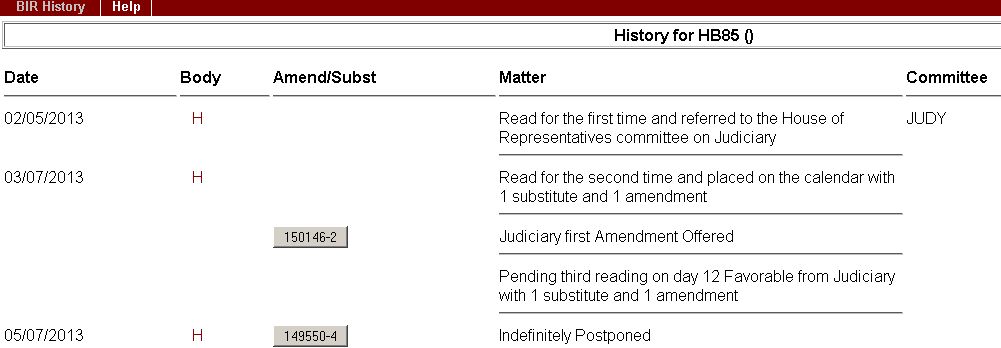
On May 20, 2013, the Alabama state legislature officially ended. And HB 85 is still "indefinitely postponed." Unless there is a "special session," HB 85 is dead in the water. For now. (This is the best we can expect, as no pol will go on record as opposing this law.)
Does this mean we'll never see this bill again. As I stated before, this bill has existed in the past (and failed just as it did this year). I will be keeping a twice-weekly watch over the legislative website in the meantime. For now, victory is ours!
Keep in mind one thing. An ounce of prevention is worth a pound of cure. But the prevention is not a one-time event. Each new legislative session means new people we have to educate. Our work is never truly finished.
Monday, April 15, 2013
UPDATE: HB 85 passes the Judiciary Committee. Emails for the full house

I was just informed by phone today that HB 85, the anti-clustering law, has passed the Judiciary and will soon go before the entire House. Why it isn't noted on the legislative website, I'll never know, but now we need to address the entire state legislature.
In the coming days I hope to have more information on this latest development.
In the meantime, if you want to email all House Members, here is the list of those with an email address:
mike.hubbard@alhouse.gov, hvgaston04@yahoo.com, paul@pljpc.com, paulbeckmanjr@yahoo.com, mikeball@knology.net, allenfarley@bellsouth.net, cengland1@hotmail.com, 3007j@att.net, greeson@yahoo.com, waynejohnson259@yahoo.com, mljatty@andycable.com, poole@gpr-law.com, john.robinson@alhouse.gov, bsketa@aol.com, staterep@co.escambia.al.us, jbarton104@gmail.com, rgbups@yahoo.com, elainebeech83@gmail.com, daniel_boman@thebomanfirm.com, babs_131@att.net, klbrown@cableone.net, mack.butler@alhouse.gov, jwcarns@yahoo.com, dchesteen@panhandle.rr.com, terri@terricollins.org, asthp20@yahoo.com, rmdavis14@aol.com, ddrake1080@aol.com, allenfarley@bellsouth.net, jfaust@co.baldwin.al.us, chadfincher@alhouse.gov, berry.forte@alhouse.gov, hvgaston04@yahoo.com, wlmdex@hotmail.com, mickyhammon@gmail.com, salanharper@gmail.com, mhillcolum@aol.com, joe@hubbardcoleman.com, mike.hubbard@alhouse.gov, isonfor101@comcast.net, kenjohnsonrep@gmail.com, rrjlsr@gmail.com, pwlee@graceba.net, richard.lindsey@alhouse.gov, weslong@mclo.org, jlove32376@aol.com, barry.mask@alhouse.gov, lawrencemcadory@bham.rr.com, jimmcc@windstream.net, mcclur@bellsouth.net, c.mac.mccutcheon@gmail.com, bcld07@gmail.com, darriomelton@gmail.com, john@tuscaloosagop.org, mike.millican@alhouse.gov, house3@alhouse.org, barry@barrymooreindustries.com, mamoor48@bellsouth.net, clearimagesal@earthlink.net, jimpattersonhd21@gmail.com, kerryrich@mclo.org, broberts1229@cs.com, yke@cec.conteduc.uab.edu,scotthrod@yahoo.com, d.r.sessions@att.net, randall.shedd@alhouse.gov, harryshiver@aol.com, david.standridge@alhouse.gov, reptodd@gmail.com, bsketa@aol.com, tughd81@gmail.com, tiger9127@bellsouth.net, jack@jackwilliams.org, philhouse44@gmail.com, repgregwren@yahoo.com
Today I wrote an email to them:
Members of the Alabama House of Representatives,
I was dismayed to hear that HB 85, the sex offender anti-clustering law, has passed the Judiciary Committee, despite my warnings of the dangers of such a bill, and now goes before a full house vote. I am writing you today to implore you to reject this terrible piece of legislation.
The purpose of the bill is to increase the already stringent residency restriction law, which is already 2000 feet from schools, daycare centers, and colleges, while local ordinances may further restrict where registered citizens can live. The law does not consider the fact few people will rent to registered persons, partially out of fear but mostly out of hatred for those on the public registry.
Consider the following statement:
“The Ordinance appears to attempt to ensure public safety, in certain parts of Allegheny County, by isolating all Megan’s Law registrants in localized penal colonies of sorts, without any consideration of the General Assembly’s policies of rehabilitation and reintegration.” -- Pennsylvania Supreme Court Justice CJ Castille, Fross et al. v. County of Allegheny, No. 17 WAP 2010
Residency restrictions create clusters of sex offenders. It is the one and only cause of clustering. If you make 98% of available housing off-limits to a group of people, a reasonable person would conclude the vast majority of those impacted by this law will move into the 2% of the remaining available housing. Passing HB 85 will eliminate much of that 2% of remaining housing. That is a very dangerous proposition.
You only need to look at the state of Iowa to understand the implications of passing a new, tighter restriction.
In 2005, Iowa passed what was at the time the most restrictive residency law in the country. Those forced to register as sex offenders could not reside within 2000 feet of any place children congregate. The impact of the law was immediate. Rural motels and trailer parks were filled with registrants as they flock to the few places left in the state where they could legally reside. One hotel with 24 rooms had 26 registered citizens at the address. Other registrants were left homeless and sleeping out of the back of their cars and trucks. Authorities reported three times as many registrants missing in the year after the residency law began than the year before (from 140 to 400). The city of Dubuque reported 90% of the city was off-limits. Another sheriff claimed that he used to know where 90% of the registrants in his county resided, but after the residency law took effect, he barely knows where half reside. By 2007, about 700 of the states 6000 registrants moved out of state or fled the country, while there was an increase of arrests of registrants for giving false addresses.
The 2007 Iowa monitoring report found that the number of sex crime convictions actually increased in the two years following the enactment of the 2000 foot residency restriction. In the year prior to the enactment of the law ending August 2005, there were 913 sex crime charges filed, with 433 ending and conviction. In the year following enactment of the law, between September 2005 and August 2006, there were 928 sex abuse charges filed, and 445 were convicted. Between September 2006 and August 2007, there were 1095 charges filed, and 490 convictions. The residency restriction laws had no positive impact on reducing sex crimes in the state. The number of failure to register convictions increased from 258 the year before the residency restriction was enacted to 442 the year after, in addition to 137 convictions for violating residency restriction laws. (See http://www.oncefallen.com/residencylaws.html for the references)
A number of studies have failed to find any correlation between where a person sleeps and whether a person re-offends. A 2003 study by the Colorado Dept. of Public Safety (which was inspired over fears of clustering, the premise of AL-HB85) found no correlation between residence and recidivism. In fact, those with stable housing and a POSITIVE support environment are less likely to re-offend. While much of the testimony before the Judiciary Committee involved transitional housing/ "halfway houses" (called "Shared Living Arrangements" in the study) the study also included those registrants living in a stable home environment. By contrast, those living where there was NO support or NEGATIVE support correlated with higher recidivism. This study dispels the claim Sen. Kurt Wallace has made that clusters of registered persons living in close proximity to each other are more likely to re-offend. (Link to Colorado study: http://dcj.state.co.us/odvsom/sex_offender/SO_Pdfs/FullSLAFinal.pdf)
Senator Kurt Wallace has made his intentions clear. He is passing a statewide law so he may shut down transitional housing in his county. Both Senators Ball and Wallace have been quoted in media reports they intend to close transitional housing in their home counties. I am dismayed the law is being used for what sounds on the surface to be little more than NIMBY-ism ("Not In My Back Yard"). But Senator Wallace's invited "expert" on the issue, Chilton County DA CJ Robinson, admitted before the Judiciary Committee that in three years, there have been no recidivists among the group of 33 Senator Wallace wishes to disband.
A number of victim rights groups and law enforcement officials have long criticized residency restrictions as counterproductive. The Iowa County Attorneys Association (of Prosecuting Attorneys) have spoken out against residency laws. (reference: http://legis.wisconsin.gov/lc/committees/study/2006/PLACE/files/murray4_place.pdf)
The Jacob Wetterling Resource Center (formerly the Jacob Wetterling Foundation) opposes residency restrictions because they cause more harm than good. "The problem is these laws may do more harm than good, if they work at all. In spite of good intentions, these laws have unintended consequences that can actually make it harder to track sex offenders." (see http://www.jwrc.org/KeepKidsSafe/SexualOffenders101/ResidencyRestrictions/tabid/84/Default.aspx)
“When you propose a law restricting sex offenders to 1,000 feet from any bus stop, that’s just not going to work,” said Laura A. Ahearn, executive director of Parents for Megan’s Law and the Crime Victims Center, who lives on Long Island. “You have to be reasonable.”
(reference: http://www.nytimes.com/2013/02/05/nyregion/suffolk-county-still-struggling-to-house-sex-offenders.html)
Residency restrictions in general already have caused a number of unconsidered consequences, including homelessness, vigilantism, and absconding. (see: http://www.ccoso.org/library%20articles/Eliminate%20Residency%20Restricitons%20for%20Sex%20Offenders.pdf)
HB 85 will increase failure to register charges, an increase in recidivism, and adverse consequences for registrants and their families as they are pushed even further to the fringes of society. (It must be noted, however, that those who "Fail To Register" are no more likely to re-offend. See http://www.ccoso.org/library%20articles/FTR%20SC%20short%20report.pdf)
A commonsense approach would be to abolish residency restrictions rather than increase them further by passing HB 85. Iowa repealed residence restrictions for all except those considered the highest risk offenders. Alabama could do the same. Instead, the state should consider commitment to an evidence-based program that stresses a positive rehabilitative environment. Recidivism rates for "sex offenders" is already low (between 2%-10% in virtually all US studies). Faith-based initiatives and positive programs like Circles Of Support and Accountability (COSA) have been shown to reduce that low rate even further. A 2005 study on COSA found the program reduced recidivism by 70%. (See: http://www.oncefallen.com/SOMyths.html for references)
There are effective treatment programs out there but they must stress healing for both offender and victim and allow registrants the opportunity to become productive citizens. HB 85 is not the way to do this.
Today I wrote an email to them:
Members of the Alabama House of Representatives,
I was dismayed to hear that HB 85, the sex offender anti-clustering law, has passed the Judiciary Committee, despite my warnings of the dangers of such a bill, and now goes before a full house vote. I am writing you today to implore you to reject this terrible piece of legislation.
The purpose of the bill is to increase the already stringent residency restriction law, which is already 2000 feet from schools, daycare centers, and colleges, while local ordinances may further restrict where registered citizens can live. The law does not consider the fact few people will rent to registered persons, partially out of fear but mostly out of hatred for those on the public registry.
Consider the following statement:
“The Ordinance appears to attempt to ensure public safety, in certain parts of Allegheny County, by isolating all Megan’s Law registrants in localized penal colonies of sorts, without any consideration of the General Assembly’s policies of rehabilitation and reintegration.” -- Pennsylvania Supreme Court Justice CJ Castille, Fross et al. v. County of Allegheny, No. 17 WAP 2010
Residency restrictions create clusters of sex offenders. It is the one and only cause of clustering. If you make 98% of available housing off-limits to a group of people, a reasonable person would conclude the vast majority of those impacted by this law will move into the 2% of the remaining available housing. Passing HB 85 will eliminate much of that 2% of remaining housing. That is a very dangerous proposition.
You only need to look at the state of Iowa to understand the implications of passing a new, tighter restriction.
In 2005, Iowa passed what was at the time the most restrictive residency law in the country. Those forced to register as sex offenders could not reside within 2000 feet of any place children congregate. The impact of the law was immediate. Rural motels and trailer parks were filled with registrants as they flock to the few places left in the state where they could legally reside. One hotel with 24 rooms had 26 registered citizens at the address. Other registrants were left homeless and sleeping out of the back of their cars and trucks. Authorities reported three times as many registrants missing in the year after the residency law began than the year before (from 140 to 400). The city of Dubuque reported 90% of the city was off-limits. Another sheriff claimed that he used to know where 90% of the registrants in his county resided, but after the residency law took effect, he barely knows where half reside. By 2007, about 700 of the states 6000 registrants moved out of state or fled the country, while there was an increase of arrests of registrants for giving false addresses.
The 2007 Iowa monitoring report found that the number of sex crime convictions actually increased in the two years following the enactment of the 2000 foot residency restriction. In the year prior to the enactment of the law ending August 2005, there were 913 sex crime charges filed, with 433 ending and conviction. In the year following enactment of the law, between September 2005 and August 2006, there were 928 sex abuse charges filed, and 445 were convicted. Between September 2006 and August 2007, there were 1095 charges filed, and 490 convictions. The residency restriction laws had no positive impact on reducing sex crimes in the state. The number of failure to register convictions increased from 258 the year before the residency restriction was enacted to 442 the year after, in addition to 137 convictions for violating residency restriction laws. (See http://www.oncefallen.com/residencylaws.html for the references)
A number of studies have failed to find any correlation between where a person sleeps and whether a person re-offends. A 2003 study by the Colorado Dept. of Public Safety (which was inspired over fears of clustering, the premise of AL-HB85) found no correlation between residence and recidivism. In fact, those with stable housing and a POSITIVE support environment are less likely to re-offend. While much of the testimony before the Judiciary Committee involved transitional housing/ "halfway houses" (called "Shared Living Arrangements" in the study) the study also included those registrants living in a stable home environment. By contrast, those living where there was NO support or NEGATIVE support correlated with higher recidivism. This study dispels the claim Sen. Kurt Wallace has made that clusters of registered persons living in close proximity to each other are more likely to re-offend. (Link to Colorado study: http://dcj.state.co.us/odvsom/sex_offender/SO_Pdfs/FullSLAFinal.pdf)
Senator Kurt Wallace has made his intentions clear. He is passing a statewide law so he may shut down transitional housing in his county. Both Senators Ball and Wallace have been quoted in media reports they intend to close transitional housing in their home counties. I am dismayed the law is being used for what sounds on the surface to be little more than NIMBY-ism ("Not In My Back Yard"). But Senator Wallace's invited "expert" on the issue, Chilton County DA CJ Robinson, admitted before the Judiciary Committee that in three years, there have been no recidivists among the group of 33 Senator Wallace wishes to disband.
A number of victim rights groups and law enforcement officials have long criticized residency restrictions as counterproductive. The Iowa County Attorneys Association (of Prosecuting Attorneys) have spoken out against residency laws. (reference: http://legis.wisconsin.gov/lc/committees/study/2006/PLACE/files/murray4_place.pdf)
The Jacob Wetterling Resource Center (formerly the Jacob Wetterling Foundation) opposes residency restrictions because they cause more harm than good. "The problem is these laws may do more harm than good, if they work at all. In spite of good intentions, these laws have unintended consequences that can actually make it harder to track sex offenders." (see http://www.jwrc.org/KeepKidsSafe/SexualOffenders101/ResidencyRestrictions/tabid/84/Default.aspx)
“When you propose a law restricting sex offenders to 1,000 feet from any bus stop, that’s just not going to work,” said Laura A. Ahearn, executive director of Parents for Megan’s Law and the Crime Victims Center, who lives on Long Island. “You have to be reasonable.”
(reference: http://www.nytimes.com/2013/02/05/nyregion/suffolk-county-still-struggling-to-house-sex-offenders.html)
Residency restrictions in general already have caused a number of unconsidered consequences, including homelessness, vigilantism, and absconding. (see: http://www.ccoso.org/library%20articles/Eliminate%20Residency%20Restricitons%20for%20Sex%20Offenders.pdf)
HB 85 will increase failure to register charges, an increase in recidivism, and adverse consequences for registrants and their families as they are pushed even further to the fringes of society. (It must be noted, however, that those who "Fail To Register" are no more likely to re-offend. See http://www.ccoso.org/library%20articles/FTR%20SC%20short%20report.pdf)
A commonsense approach would be to abolish residency restrictions rather than increase them further by passing HB 85. Iowa repealed residence restrictions for all except those considered the highest risk offenders. Alabama could do the same. Instead, the state should consider commitment to an evidence-based program that stresses a positive rehabilitative environment. Recidivism rates for "sex offenders" is already low (between 2%-10% in virtually all US studies). Faith-based initiatives and positive programs like Circles Of Support and Accountability (COSA) have been shown to reduce that low rate even further. A 2005 study on COSA found the program reduced recidivism by 70%. (See: http://www.oncefallen.com/SOMyths.html for references)
There are effective treatment programs out there but they must stress healing for both offender and victim and allow registrants the opportunity to become productive citizens. HB 85 is not the way to do this.
Thursday, February 21, 2013
Press Release: Shiloni Transformation Ministries opposes HB 85 anti-clustering law
Shiloni Transformation Ministry Press Release
Shiloni Transformation Ministry has taken a stand against Alabama HB 85. We believe this bill to be in direct violation of Holy Scripture and of citizen's unalienable rights. For those who are not familiar with the bill in question, we are referring to the Anti-Clustering Law being made statewide in Alabama. This law was passed in 2010 for the City of Birmingham in Jefferson County as a "test run" for the entire state to adopt this very damaging piece of legislation. When it was passed in 2010 it effectively disabled our ministry from being able to take in former sex offenders out of prison on a transitional basis. Our ministry has been working to rehabilitate those said sex offenders through use of the Bible, church-related classes, group therapy sessions, and accountability training. We focus on tried and true methods proven time and time again to lower the recidivism rate of sex offenders within all areas of the criminal justice system. HB 85 does state that there is a provision made for half-way houses that are "state approved," we have researched this statement and have found that currently there is no state approval agency or standard set in place. What this tells us is that the legislature of Alabama has taken a stand against our ministry, the US Constitution in the Freedom of Religion and has violated the due process of law, both on a federal and state level.
The Director, Bill Grier, of Shiloni Transformation Ministry had this to say, " The State of Alabama has selectively opposed the assistance of any and all convicted sex offenders. It breaks my heart that I have been made the messenger to sex offenders and even their families that my hands are tied and there is nothing I can do to help them because of the current residency restrictions. It used to be, before the homeless sex offender laws took place, that a sex offender could not even be released without a legal address. It is my belief that we are worse off with the homeless laws in place because the sex offender can be registered in the woods, under a bridge, or even a vacant house. This does not help to prevent them from reoffending but only supports recidivism because they have no structured environment to teach them to take responsibility, and hold themselves accountable for their past and enable them to move forward to become productive members of society. In fact, they don't even send out notification flyers for those registered as homeless. There are sex offenders who already have been granted parole but have nowhere to go. I and my wife Barbara saw this need while working as volunteers in many of the prisons in the State of Alabama and made it our mission to fill this need not only for the sex offenders but also to help protect the community. The current lack of proper treatment of sex offenders is largely to blame for the recidivism of sex offenders and has resulted in an over-crowding of the state and county jails. This is why Jefferson County and the City of Birmingham has went bankrupt since the issuance of the anti-clustering laws within Jefferson County. We will see the same thing happen statewide if HB 85 is passed into law. We need to have some guidelines for operation and supervision set in place for proper transitional housing. We need to stop viewing this problem as a political gambit and start working to correct the underlying problems that have been created by these laws. Only then will we see a positive change in our society."
We would also like to bring forward the statistics found from the State of Colorado Department of Corrections Study in 2003. They found that residency restrictions had no effect on recidivism of sex offenders, but a positive living environment, such as a halfway house or with a supportive family, increases an offender's likelihood of living a productive, successful life once their sentences have been served.
Please contact:
Dr. Dustin T. Friend 205-467-8293
Wednesday, February 6, 2013
State Rep. Wallace admits to segregationist NIMBYism motivation behind HB 85

http://www.myfoxal.com/story/20968454/community-concerned-over-sex-offenders-living-at-a-church

Community concerned over sex offenders living at a church
Posted: Feb 05, 2013 11:51 AM EST
Updated: Feb 06, 2013 10:47 AM EST
By Clare Huddleston - bio | email
FOX6 News discovered that 36 sex offenders have listed this church as their place of residence since 2010. Source: WBRC video
CHILTON COUNTY, AL (WBRC) -
Triumph Church on County Road 374 looks like many churches in Chilton County. It has a cross above the door, an inspirational message on the sign out front, but it has also become home to 36 sex offenders.
"I don't like them living that close to me because my wife works in the yard a lot and they walk up and down the road all the time," explained Gordon "Duck" Burkhalter.
Burkhalter says Triumph Church popped up a few years ago. He does not mind the ministry, but he does not think it needs to be in a group setting and he does not like their living conditions.
"They got 4, 5, 6 trailers with 3-4 people in each trailer as far as I know," said Burkhalter.
As more sex offenders started moving into the trailers behind Triumph Church, it caught the eye of Chilton County Chief Deputy District Attorney, CJ Robinson.
"When somebody is released from the Department of Corrections and they are a registered sex offender, the DA get an info packet from the department of corrections and it lists the address, names, and info about the offense," said Robinson.
Since August 2010:
36 sex offenders have listed Triumph Church as their address once they got out of prison.
29 of them committed their crime against children; the youngest victim was 4 years old.
13 cases involved some form of child molestation.
Another concerning stat for Robinson, these convicted criminals don't appear to have any ties to Chilton County. "Only one committed their crime in Chilton county," said Robinson, "That offense was a misdemeanor, it was a non-jail sentence, it was a probationary sentence."
"It's a scary thought," said State Representative Kurt Wallace, "I wouldn't have a problem with us taking care of our own but don't send me your problem children."
Wallace isn't happy these sex offenders are moving into his district. He has pre-filed House Bill 85 for the 2013 legislation session. The bill states two sex offenders must live 500 feet apart from each other; they can't live under the same roof unless they are related or in a state-approved facility.
At this time there is no treatment center for sex offenders and if Wallace's bill passes it could severely limit where sex offenders can live.
Wallace said, "The biggest concern that people have is where are they gonna go? I don't know. I would suggest they go back to their families and I know where I don't want them to go. I don't want them in my neighborhood."
Ricky Martin who runs Triumph Church declined to talk to Fox 6 News on camera. However, last year he told our sister station in Montgomery, WSFA, that all of the sex offenders who have come through his church have left as success stories.
Martin confirmed to Fox 6 News he's against Wallace's bill and he believes his ministry is helping. One sex offender agrees.
"He has helped us out," said Selid Holt. Holt was convicted of first degree sexual abuse of a 9-year-old female. He moved to Triumph Church from Barbour County.
Robinson confirms the sex offenders like Holt, who have moved to Triumph Church, have not committed another sex crime that he's prosecuted. Still he thinks in this case it's better to be proactive than reactive.
"If we wait until there is a child that has been victimized we've waited too late," said Robinson.
Tuesday, February 5, 2013
Press Release: ReFORM-AL strongly opposes Wallace’s segregationist HB 85 proposal
Hopefully this will get out to the proper press.
http://www.prlog.org/12074050-reform-al-strongly-opposes-wallaces-segregationist-hb-85-proposal.html
http://www.prlog.org/12074050-reform-al-strongly-opposes-wallaces-segregationist-hb-85-proposal.html
Press Release: ReFORM-AL strongly opposes Wallace’s segregationist HB
85 proposal
Press Release: State
Representatives Wallace, Jones, and Beckman have sponsored a bill (HB 85) that,
if passed, will restrict those forced to register as “sex offenders” to live
500 feet apart from each other and no more than one to a residence or apartment
building. While this idea sounds good on paper, the results have disastrous
consequences that could put families at high risk of harm.
The state of Alabama currently has
a 2000 foot living and work restriction in place; as a consequence, the vast
majority of registered citizens, intent on obeying the law after serving out
their sentences, are forced to live in very small pockets where they are
legally allowed to live and work people will rent to them. The so-called “sex
offender clusters” were created by residency restriction laws. For this reason,
a growing number of states, like Iowa, and municipalities across the United
States have scaled back residency restrictions. Studies in Minnesota and
Colorado have shown residency restrictions not only failed to protect citizens,
they may actually encourage recidivism. Unlike other states, Alabama's state
legislators have decided to exacerbate the problem by creating further
limitations on where those forced to register can live.
If HB 85 passes, thousands of Alabama's
registered citizens will be forced out of their homes, and that instability has
been proven to increase the likelihood of re-offense. When Iowa created their
residency restrictions in 2005, they saw a 350% increase in homelessness, and
increase the failure to register cases, and even a slight increase in sex
crimes in that state in the year following an increase of residency
restrictions. In short, while increasing residency restrictions sound good on
paper, it actually encourages crime.
Those who sponsor this bill claim
that when sex offenders are concentrated in a particular area, this somehow
poses a higher risk. Studies have found the opposite; the 2003 Colorado
Department of Corrections study on residency restrictions found that residency
restrictions had absolutely no impact on recidivism, but a positive living
environment, such as a halfway house or with a supportive family, increases an
offender’s likelihood of living a productive, successful life once their
sentences have been served.
Recidivism among those convicted
of sex crimes are already far lower than comparable crimes; the US Department
of Justice found after three years, only 3.5% were reconvicted of a new sex
crime. Longer-term studies have found recidivism rates are lower than comparable
offenses. Interestingly, in an e-mail from Sen. Wallace, sex offenders were
compared to “crack addicts”, implying that merely forcing them to live a
certain distance away from their “addictions” is a viable solution. In our
society, drug offenses had been increasingly subject to a number of punitive
laws over the years, and only now have we seen the negative impact that many
well-intentioned drug laws have created; in many cases, drug laws had created
an environment that encouraged further drug abuse. We recognize in our society
that drug offenders are now amenable to treatment, and there are no shortages
of halfway houses, treatment options, and support groups for drug offenders. We
are also aware that drug offenders are not limited by geography, nor are all
drug offenders the same.
Sex offenders are not a
homogenous group. Not everyone on the registry will reoffend in spite of the
laws, not because of them. Sex offenses are not a matter of geography, but of
relationships; what person sleeps at night has no impact on what a person does
during the day. While there are a small number of sex offenders who are
“fixated” and resistant to treatment, the majority of sex offenders are indeed
amenable to treatment, and many have also shown remorse for the things they
have done and have no desire to harm anyone.
ReFORM-AL strongly opposes HB 85.
We believe this bill will cause far more harm than good for our society. While
it may be popular to harm those convicted of sexual offenses in every way
possible, our focus should be on doing things that work, rather than things
that simply feel good. This law will ultimately backfire; if passed, expect to
see an increase of homeless registrants, registrants who simply failed to
register, and a possible increase of sex offenses. We are not even addressing
the fact that the vast majority of sex crimes are committed by people with no
prior record (about 95% of sex crime arrests). Thus, we are devoting a large
amount of resources focusing on roughly 5% of the potential threat at best;
only about 5% of that 5% will likely re-offend.
Instead, ReFORM-AL would like to
offer a solution based upon solid research and experience. Residency
restrictions have been proven to be counterproductive; therefore, instead of
passing more restriction laws, the state of Alabama should look at repealing
them altogether in favor of using the meager resources wasted on this bad piece
of legislation on proven methods of education, treatment, and rehabilitation.
There are a number of successful resources proven to greatly reduce the already
low recidivism rates for those convicted of sex crimes, such as restorative
justice programs, circles of support and accountability, and organizations like
Jacob Wetterling Resource Center and Stop It Now!
The state of Alabama is only one
of seven states that do not support treatment programs of any kind. The
sponsors of this bill deny any effective treatment program exists, despite the
evidence given by 43 other states and a number of nations around the world that
treatment programs that stress accountability, empathy, and responsibility are
very effective. This bill, despite the included language that claims an “exception”
for halfway houses, will have no exceptions in practice. In an interview with WTVY
4 Dothan, state Representative Mike Jones stated he was going to propose what
we now call HB 85 in order to prevent a halfway house from forming. Yet State
Representative Wallace claims there will be an exception to the law. Based on
Jones’s words, we can reasonably conclude no halfway house will ever be
approved as the exception.
Instead of promoting the treatment,
rehabilitation, and education programs proven to reduce recidivism, they are
choosing to gamble with the lives of your children bypassing feel-good
legislation proven time and time again to exacerbate the problem of great concern
and our society. Revenge driven laws have proven to make things worse; tough on
crime does not mean smart on crime.
The bottom line is if you truly
care about children, you will also oppose HB 85. Our efforts to reduce sexual
offending in this country should begin with evidence-based education and
awareness programs that stress sexual accountability, responsibility, and open
communication, coupled with services that provide proper treatment for those
who have sexually offended so they at are at least given the opportunity to
atone for their past crimes and become a productive member of society. Doing
this is not “sympathy for sex offenders”, but in investment in ending the
perpetuation of all manners of violence in our great nation.
Derek W. Logue
ReFORM-AL (Registered Former Offender Restoration Movement)
Monday, January 28, 2013
HB 85 to reintroduce anti-clustering law to legislative session
Anti-clustering laws are very bad news, since registrants are forced into the few legal areas to live. This law did not pass statewide in 2010 but was passed in Jefferson County. This law needs to be taken down immediately. Contact the legislators today to prevent this bill from passing!
HB 85
To prohibit more than one unrelated criminal sex
offender from residing in a residence; to provide that no more
than one criminal sex offender may reside in an apartment
complex unless there is a distance of at least 500 feet from
the residence of any other offender; to provide exceptions;
and in connection therewith would have as its purpose or
effect the requirement of a new or increased expenditure of
local funds within the meaning of Amendment 621 of the
Constitution of Alabama of 1901, now appearing as Section
111.05 of the Official Recompilation of the Constitution of
Alabama of 1901, as amended
BE IT ENACTED BY THE LEGISLATURE OF ALABAMA:
Section 1. (a) No unrelated criminal sex offender
may establish a residence or other living accommodation in a
residence where another criminal sex offender whose name
appears on the county sheriff's official published sex
offender list resides.
(b) No criminal sex offender whose name appears on
the county sheriff's official published sex offender list may
establish residence or other living accommodations unless
there is a distance of 500 feet or more from the residence of
any other criminal sex offender.
(c) The owner or lessee of the property who
knowingly, willingly, or intentionally permits a violation of
subsection (a) or subsection (b) shall be guilty of a
misdemeanor and, upon conviction, may be imprisoned in the
county jail for hard labor for not more than 90 days and be
fined not more than five thousand dollars ($5,000) for each
violation. When collected, those fines shall be equally
distributed to the county sheriff's department and the office
of the district attorney of the county or to the municipal
court for any case prosecuted in the municipal court.
(d) An owner or lessee of property shall not be in
violation of subsection (a) or subsection (b) if the sex
offender is the spouse or child of the owner or lessor or if
the spouse or child is the owner or lessee of the property.
(e) An owner of property shall not be in violation
of subsection (a) or subsection (b) where the application for
a lease or the lease itself provides a signed statement by the
lessee that the lessee is not a convicted sex offender.
(f) Notwithstanding any other provision of Chapter
20A of Title 15, Code of Alabama 1975, to the contrary, a sex
offender shall not be in violation of subsection (a) or (b) if
the sex offender is residing at a treatment facility that is a
residential health care facility approved by the State Health
Planning and Development Agency or at a halfway house or
treatment facility certified by the state Health Planning and
Development Agency, or is otherwise incarcerated in a state
facility.
Section 2. Although this bill would have as its
purpose or effect the requirement of a new or increased
expenditure of local funds, the bill is excluded from further
requirements and application under Amendment 621, now
appearing as Section 111.05 of the Official Recompilation of
the Constitution of Alabama of 1901, as amended, because the
bill defines a new crime or amends the definition of an
existing crime.
Section 3. This act shall become effective on the
first day of the third month following its passage and
approval by the Governor, or its otherwise becoming law.
Below are the bill's sponsors. Please contact them:
Representative Kurt Wallace was elected to the Alabama House of Representatives on November 2, 2010.
He describes himself as a Conservative Christian who will “fearlessly defend my God, country, and family against all who would do them harm.”
____________________________________________________
____________________________________________________
Committees:
Representative Paul Beckman was elected to the Alabama House of Representatives on November 2, 2010.
Here is a news article on the subject. Note the comments from State Rep. Ball:
http://whnt.com/2013/01/27/billpreventgroup/
Bill Aims To Prevent Group Living By Convicted Sex Offenders
Posted on: 9:05 pm, January 27, 2013, by Nick Banaszak
HUNTSVILLE, Ala.(WHNT)-Keeping convicted sex offenders away from each other is the aim of a newly filed bill in the Alabama Legislature.
State Rep. Mike Ball (R-Madison) is among a group of lawmakers who are targeting so-called sex offender “clusters” that are often near children. If passed, House Bill 85 would prohibit convicted sex offenders from living at the same residence, preventing community living that Ball said has gotten out of hand in many parts of the state. The bill would also require that all sex offenders live at least 500 feet away from each other.
Ball said several Alabama communities have been hampered by groups of sex offenders living together in closely condensed places like motels and apartment complexes.
“When folks feel their children are endangered, we need to do something,” said Rep. Ball, who helped craft the bill. “If someone has a drinking problem or a drug problem, you need to stay away from people with that same problem, because it’s just not conducive to managing to curb your instincts…If children live nearby and there’s just a large number of them [sex offenders], it just creates a huge problem for that particular community.”
House Bill 85 was filed last week, but there are two exceptions for the 500 foot rule. Sex offenders who are temporarily living at treatment centers within close proximity to other offenders’ houses would be exempt from the guidelines, as would sex offenders who are related.
Rep. Ball dismissed claims that the bill would make it even tougher for sex offenders to live anywhere in Alabama. State law already prohibits sex offenders from living within 2,000 feet of schools or daycare centers.
“The fact is, if you commit sex offenses, penalties are probably not as harsh as a lot of people would like them to be…Folks need to think long and hard before they commit those violations.”
Here is Mike Ball's info. Feel free to educate him:
HB 85
To prohibit more than one unrelated criminal sex
offender from residing in a residence; to provide that no more
than one criminal sex offender may reside in an apartment
complex unless there is a distance of at least 500 feet from
the residence of any other offender; to provide exceptions;
and in connection therewith would have as its purpose or
effect the requirement of a new or increased expenditure of
local funds within the meaning of Amendment 621 of the
Constitution of Alabama of 1901, now appearing as Section
111.05 of the Official Recompilation of the Constitution of
Alabama of 1901, as amended
BE IT ENACTED BY THE LEGISLATURE OF ALABAMA:
Section 1. (a) No unrelated criminal sex offender
may establish a residence or other living accommodation in a
residence where another criminal sex offender whose name
appears on the county sheriff's official published sex
offender list resides.
(b) No criminal sex offender whose name appears on
the county sheriff's official published sex offender list may
establish residence or other living accommodations unless
there is a distance of 500 feet or more from the residence of
any other criminal sex offender.
(c) The owner or lessee of the property who
knowingly, willingly, or intentionally permits a violation of
subsection (a) or subsection (b) shall be guilty of a
misdemeanor and, upon conviction, may be imprisoned in the
county jail for hard labor for not more than 90 days and be
fined not more than five thousand dollars ($5,000) for each
violation. When collected, those fines shall be equally
distributed to the county sheriff's department and the office
of the district attorney of the county or to the municipal
court for any case prosecuted in the municipal court.
(d) An owner or lessee of property shall not be in
violation of subsection (a) or subsection (b) if the sex
offender is the spouse or child of the owner or lessor or if
the spouse or child is the owner or lessee of the property.
(e) An owner of property shall not be in violation
of subsection (a) or subsection (b) where the application for
a lease or the lease itself provides a signed statement by the
lessee that the lessee is not a convicted sex offender.
(f) Notwithstanding any other provision of Chapter
20A of Title 15, Code of Alabama 1975, to the contrary, a sex
offender shall not be in violation of subsection (a) or (b) if
the sex offender is residing at a treatment facility that is a
residential health care facility approved by the State Health
Planning and Development Agency or at a halfway house or
treatment facility certified by the state Health Planning and
Development Agency, or is otherwise incarcerated in a state
facility.
Section 2. Although this bill would have as its
purpose or effect the requirement of a new or increased
expenditure of local funds, the bill is excluded from further
requirements and application under Amendment 621, now
appearing as Section 111.05 of the Official Recompilation of
the Constitution of Alabama of 1901, as amended, because the
bill defines a new crime or amends the definition of an
existing crime.
Section 3. This act shall become effective on the
first day of the third month following its passage and
approval by the Governor, or its otherwise becoming law.
Below are the bill's sponsors. Please contact them:
REPRESENTATIVE
KURT WALLACE
(R)
42nd District
(Chilton and Shelby)
REPRESENTATIVE
| |
| State House: | Room 427-J 11 S. Union Street Montgomery, AL 36130 (334) 242-7772 | Home Address: | 24 Maple Drive Maplesville, AL. 36750 |
Work Phone: | (334) 366-4211 | Email: | representativewallace@gmail.com |
He describes himself as a Conservative Christian who will “fearlessly defend my God, country, and family against all who would do them harm.”
____________________________________________________
____________________________________________________
REPRESENTATIVE
MIKE JONES
(R)
92nd District
(Covington and Escambia)

REPRESENTATIVE
| |
| State House: | Room 427-E 11 S. Union Street Montgomery, AL 36130 (334) 242-7739 | Home Address: Work Address: | 486 Sutton Road Andalusia, AL. 36420 P.O. Box 957 Andalusia, AL. 36420 |
Home Phone: Work Phone: Cell Phone: Fax Number: | (334) 222-4367 (334) 222-0111 (334) 804-8240 (334) 427-1671 | Email: | mljatty@andycable.com |
REPRESENTATIVE Mike Jones was elected to the Alabama House of Representatives on November 2, 2010.
______________________________________________________________
______________________________________________________________
REPRESENTATIVE
PAUL BECKMAN
(R)
88th District
(Autauga and Elmore)

Committees:
REPRESENTATIVE
| |
| State House: | Room 427-D 11 S. Union Street Montgomery, AL 36130 (334) 242-7499 | Home Address: District Address: | 1803 Tara Drive Prattville, AL. 36066 P.O. Box 680155 Prattville, AL. 36068 |
Home Phone: Work Phone: District Phone: Cell Phone: Fax Number: | (334) 361-0977 (334) 834-4808 (334) 323-5918 (334) 300-1780 (334) 834-4801 | Email: | paulbeckmanjr@yahoo.com |
Here is a news article on the subject. Note the comments from State Rep. Ball:
http://whnt.com/2013/01/27/billpreventgroup/
Bill Aims To Prevent Group Living By Convicted Sex Offenders
Posted on: 9:05 pm, January 27, 2013, by Nick Banaszak
HUNTSVILLE, Ala.(WHNT)-Keeping convicted sex offenders away from each other is the aim of a newly filed bill in the Alabama Legislature.
State Rep. Mike Ball (R-Madison) is among a group of lawmakers who are targeting so-called sex offender “clusters” that are often near children. If passed, House Bill 85 would prohibit convicted sex offenders from living at the same residence, preventing community living that Ball said has gotten out of hand in many parts of the state. The bill would also require that all sex offenders live at least 500 feet away from each other.
Ball said several Alabama communities have been hampered by groups of sex offenders living together in closely condensed places like motels and apartment complexes.
“When folks feel their children are endangered, we need to do something,” said Rep. Ball, who helped craft the bill. “If someone has a drinking problem or a drug problem, you need to stay away from people with that same problem, because it’s just not conducive to managing to curb your instincts…If children live nearby and there’s just a large number of them [sex offenders], it just creates a huge problem for that particular community.”
House Bill 85 was filed last week, but there are two exceptions for the 500 foot rule. Sex offenders who are temporarily living at treatment centers within close proximity to other offenders’ houses would be exempt from the guidelines, as would sex offenders who are related.
Rep. Ball dismissed claims that the bill would make it even tougher for sex offenders to live anywhere in Alabama. State law already prohibits sex offenders from living within 2,000 feet of schools or daycare centers.
“The fact is, if you commit sex offenses, penalties are probably not as harsh as a lot of people would like them to be…Folks need to think long and hard before they commit those violations.”
Here is Mike Ball's info. Feel free to educate him:
REPRESENTATIVE
MIKE BALL
(R)
10th District
(Madison)
REPRESENTATIVE
| |
| State House: | 11 South Union Street Room 401-A Montgomery, AL 36130 (334) 242-7683 | District: | Post Office Box 6302 Huntsville, AL 35824 | ||
| Home Phone: Leg. Phone: | (256) 772-8730 (256) 539-5441 | Email: | mikeball@knology.net |
Subscribe to:
Posts (Atom)